
Objectives
- List the characteristics of the Baroque era (1600-1750) in context of social change including religious wars (Protestants vs. Catholics), the exploration and colonization of the New World, and the rise of middle-class culture.
- Identify a new style—monody—that featured solo song with instrumental accompaniment in the Baroque period through listening examples.
- Define figured bass, a shorthand that allowed the performer to supply chords through improvisation.
- Compare and contrast the major-minor tonality system and the equal temperament tuning system.
- Explain the significance of the union of text and music as expressed in the Baroque Doctrine of the Affections and reflected in genres such as opera, oratorio, and cantata.
- Define and compare the genres of opera, oratorio, and cantata.
- Compare and contrast the development of two types of concertos: the solo concerto and the concerto grosso.
- Correctly identify visually and aurally the main keyboard instruments of the Baroque era: organ, harpsichord, and clavichord.
- Describe the main characteristics of J. S. Bach's keyboard music, in particular his Well-Tempered Clavier.
Vocal Music in the Baroque (1600-1750)
Old and New Styles
Very early in the Baroque, composers acknowledged two musical trends that had emerged from the 16th century. They called them stile antico and stile moderno, or old and new style. Stile antico referred to the polyphonic music of the Renaissance, represented by the church music of Palestrina. Stile moderno referred to the more recent homophonic style found in the madrigals of Rore, Gesualdo, and Monteverdi.
Music had been used in dramatic settings since ancient Greece. Some 13th century motets may have been staged, and it is certain that some 16th century songs, Italian intermezzo, were featured in plays between acts. Shortly before the turn of the 16th century, some madrigal composers began to experiment by combining madrigals into a madrigal cycle, a series of madrigals with simple comic plots.
The Doctrine of Affections
The Doctrine of the Affections, first presented at the end of the Renaissance, stated that music didn't just represent emotion, but was the embodiment of emotion (affect) itself. Thus, a set of rules could be devised that related, for example, musical rhythm or the characteristics of a melodic line to a particular emotional state. For instance, the Choral Was mein Gott will by J. S. Bach was composed to make the listener feel the specific emotion that the music embodied, not merely to portray an emotion. The goal of Baroque composers was to write music that would be the equivalent of the precise mood expressed by the written word. It was believed that different combinations of tempos and keys (tonalities in music) had the power to make listeners have the same specific feelings and moods that words conveyed.
Composer: Johann Sebastian Bach
-
"Was mein Gott will"
The Beginnings of Opera
In 1581, a composer from Florence named Vincenzo Galilei (c.1520-1591), father of the astronomer Galileo Galilei, published A Dialogue about Ancient and Modern Music, in which he argued that polyphony was unable to express the dramatic needs of poetry. A single musical line, he argued, was far better at expressing emotion. Galilei and a few other composers, including Jacopo Peri (1561-1633) and Giulio Caccini (1545-1618), became the central figures in a move towards monody, a homophonic style of singing that featured a single sung melody over an instrumental accompaniment. These composers became known as the Florentine Camerata. While their music does not rank among the greatest of the period, their ideas about the use of homophony were the defining musical concepts of the early Baroque.

“Opera was big business in Venice. From 1637 to 1678, more than 150 operas were produced in nine different theaters. The Baroque public clearly loved opera...”

The Florentine Camerata productions, although reserved for the enjoyment of wealthy and aristocratic patrons, are generally considered to be the beginnings of opera. The Florentine court, however, proved to be more interested in a combination of ballet (dances) and musical scenes based on Greek mythology; In the 1620s, opera productions moved to Rome and, from there, to Venice, where the first true popular opera was staged in the San Cassiano theater in 1637. These opera productions were significant because, among other things, this was the first time that the paying public had access to the type of extravagant stage productions with which aristocrats in Rome and Florence were already familiar. Opera was big business in Venice. From 1637 to 1678, more than 150 operas were produced in nine different theaters. The Baroque public clearly loved opera.
Vocal Music
There were three main vehicles for vocal music in the Baroque: Opera, Secular Cantata, and Oratorio.
Opera
The earliest surviving opera was written by a member of the Camerata named Jacopo Peri (1561-1633), whose Euridice dates from the year 1600. Based on the Greek legend of Orpheus and Euridice, the opera is almost entirely recitative. Peri wrote in the foreword that its style was intended to "imitate speech in song."
Monteverdi's Operas
In most transitional periods in music history, it is difficult to pinpoint when an old style ends and a new one begins. In the Baroque, however, since it may be argued that the Baroque period began precisely in 1607, the year that the first work that we consider an opera, Monteverdi's Orfeo, premiered in Mantua, we can definitively state a beginning.
We have already read about Monteverdi in relation to the madrigal. In 1607 he was, therefore, an established composer with several published major works. While members of the Florentine Camerata had already tried to write opera-like works, Orfeo contains more variety and a much greater emotional range than any previous attempts.
Monteverdi’s Orfeo used a libretto (the play of the opera) as text. The libretto contained several musical elements that reappeared through the course of the opera’s several acts.
- Aria: This solo song is the most ornate form of monody found in Baroque Italian opera. It is often highly ornamental, allowing the singer room to improvise and showoff a bit. Perhaps the most famous aria from Orfeo is Possente spirto.
- Recitative: This was an entirely new creation, featuring a lot of text, presented quickly and without repeats, to move the action along. In recitative, such as Dafne's speech from Orfeo, the vocal line is free and sparsely accompanied. There are few true resting spots; the harmony changes frequently.
- Ensemble pieces: Monteverdi introduced instrumental dances, duets and madrigal-like ensembles to the opera, giving it even more variety and entertainment value.
These features of opera (with a few revisions and modifications) remained intact in Italian opera for almost 300 years. After Orfeo, opera houses were established in all of the major cities in Italy, and the genre quickly spread throughout Europe. Opera was not just a musical form, but a spectacular type of entertainment that required lavish costumes, sets, and staging. The plots of Baroque opera were usually tragedies modeled after Greek mythology, thereby keeping with the Baroque ideal of using the best of Ancient Greek and Roman culture.
Composer: Alessandro Striggio
-
"L'Orfeo: Possente spirto (Excerpt)"
Composer: Alessandro Striggio
-
"L'Orfeo, SV 318: Act I: Rosa del ciel (Orfeo)"
Composer: Claudio Monteverdi
-
"Canzonette d'Amore; Monteverdi, Claudio"
“The castrati were extremely popular and, by all accounts, possessed extremely agile and beautiful voices...”
One fascinating aspect of Baroque opera culture was the training and popularity of the castrato, a male performer who sang in the high soprano range. Castrati were extremely popular and, by all accounts, possessed extremely agile and beautiful voices. Castratos were castrated before puberty specifically so they could develop extraordinarily powerful and flexible voices. The practice was dropped in the late 18th century. Because of the popularity of Italian opera throughout 18th-century Europe—except France—singers such as Ferri, Farinelli (generally regarded as the greatest castrato), Senesino, and Pacchierotti became the first operatic superstars, earning enormous fees and widespread adulation.
Secular Cantata
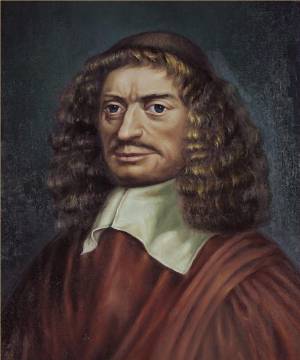
The secular cantata was a popular form of musical entertainment in Baroque Italy. Prominent composers such as Luigi Rossi (1597-1653) and Giacomo Carissimi (c.1605-1674) wrote numerous cantatas for performance at social gathering in the homes of wealthy aristocrats. The earliest secular cantatas were short and consisted of contrasting sections of recitatives and arias.
One of the most prolific composers of secular cantatas was Barbara Strozzi (1619-c.1663). Between 1644 and 1663, Strozzi published eight volumes of vocal works containing about one hundred pieces, most of which were individual arias and secular cantatas for soprano and basso continuo.
One of the most popular pieces is Le tre Grazie ad Venere(The Three Graces to Venus). The texts of many of her cantatas center on love, or unrequited love, favorite themes among 17th century composers. In all probability, Strozzi performed these pieces for a Venetian fellowship of poets, philosophers, and historians who met in her father's home.
Composer: Barbara Strozzi
-
"Le tre grazie a Venere"
Oratorio
Early Baroque oratorio appeared in two forms: the Latin Oratorio and the oratorio volgare, which used Italian texts. Oratorios are always based on a religious theme or biblical text. The Latin oratorio included the roles of narrator and chorus in addition to the central characters. It reached its peak in the works of the Roman composer Giacomo Carissimi. The finest of his many oratorios, Jeptha (ca. 1649), was based on an Old Testament story from the Book of Judges.
Carissimi's pupil Alessandro Scarlatti (1660-1725) was one of the principal composers of the oratorio volgare. In the hands of Scarlatti, the oratorio became analogous to opera. While the themes remained religious, the texts were in Italian, the role of the narrator was eliminated, and the chorus was abandoned. In fact, the oratorio was little more than a substitution for opera, which was banned by the church during Lent.
The oratorio spread from Italy to the other countries of Europe. Heinrich Schütz (1585-1672), who studied in Italy, introduced the oratorio to Germany. The influence of his teacher Monteverdi is apparent in Erhore mich, wenn ich rufe. Marc-Antoine Charpentier (1645-1704), a pupil of Carissimi, was the principal oratorio composer in France.
In England, the oratorio rose to its height in the monumental works of George Frideric Handel (1685-1759).
Composer: Heinrich Schütz
-
"Psalmen Davids: Erhore mich, wenn ich rufe"



