
Learning Objectives
- Relate how Romantic poets and artists abandoned traditional subjects, turning instead to the passionate and the fanciful.
- Relate how the Industrial Revolution impacted the technological development and affordability of musical instruments.
- Analyze how the orchestra grew in size and sound as new instruments were introduced and composers demanded greater levels of expression.
- Illustrate how Romantic composers explored nationalistic folklore and exotic subjects.
- Identify the form of romantic period songs, including strophic, through-composed, and the modified strophic forms.
- Examine the German art song (or Lied) as a favored romantic period genre.
- Discuss how the music of Franz Schubert impacted romantic period music.
- Discuss how the music of Frédéric Chopin impacted romantic period music.
- Trace the ascendance of program music in relation to absolute music.
- Summarize how political unrest throughout Europe stimulated the formation of schools of musical nationalism in Russia, Scandinavia, Spain, England, and Bohemia among other countries.
- Differentiate between the distinct national styles of romantic opera in France, Germany, and Italy.
- Discuss how the Italian nationalist composer Giuseppe Verdi impacted romantic period music.
- Trace how choral music became a popular artistic outlet for the middle classes.
- Discuss how the Russian composer Pyotr Ilyich Tchaikovsky impacted romantic period music.
Romantic Period (1820–1910)
The Traditionalists
Anton Bruckner
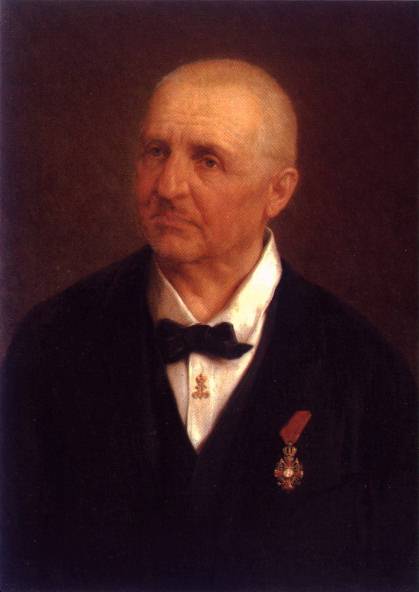
Though Bruckner deeply admired Richard Wagner and, like Wagner, employed very large orchestras and advanced chromaticism, we put him in the traditionalist camp because of his use of standard forms (primarily the symphony) and his large sacred output. He did not write program music, other than a few descriptions he inserted into his Fourth Symphony (known as the “Romantic”).
Bruckner came from a musical and deeply religious family in rural Austria. In a way similar to several other composers we have studied, Bruckner showed early talent, became an assistant organist as a child, then served as a choirboy, which gave him a good early musical education. After working as an organist in St. Florian (a town close to Linz, Austria) and then in Linz, he eventually became a professor at the Vienna Conservatory. His works were challenging, particularly after he absorbed Wagner’s influence, because they pushed the boundaries of harmony, did not provide clear, easy themes to follow, and unfolded over extraordinarily long time spans. They remain challenging for the latter reason, but their meditative mood and pious depth makes them worth experiencing. The younger composer Gustav Mahler admired Bruckner tremendously and became his good friend. Bruckner appears to have remained a fairly simple and very humble man, reluctant to fully embrace his fame. The medal visible in the picture of Bruckner on this page is for the Order of Franz Joseph, which the Austrian emperor awarded him in 1886.
We listened to excerpts from his Fourth Symphony in the “First Look” section, illustrating dramatic crescendos and thickening texture. Here is the first movement in its entirety.
Composer: Anton Bruckner
-
"Symphony No. 4 in E-Flat Major, WAB 104, "
Pyotr Ilich Tchaikovsky
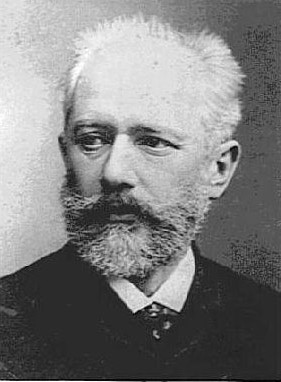
Tchaikovsky is considered a conservative composer. Younger than Brahms, Verdi, and Wagner, he continued to write four-movement symphonies and fairly traditional music long after many composers had moved on to other realms. He was not a true nationalist and at times seemed more intent on paying homage to the music of the German Classicists than incorporating Russian folk music into his works. This placed him at odds with his fellow Russian composers in The Five.
In many texts, Tchaikovsky appears as a tragic figure, wracked with guilt over his homosexuality, hampered by bouts of depression, and haunted by rumors of suicide and scandal. Indeed, to some, his highly emotional Symphony No. 6, known as the Pathétique (his final work), resembles a musical suicide note. Tchaikovsky's last symphony, called—at the prompting of his brother Modest—the Pathetique, rather than simply Program Symphony as the composer had originally intended, was first performed in St Petersburg under Tchaikovsky's direction on 28th October, 1893, the year of his death. The program of the work, which had been sketched earlier in the year and orchestrated during the summer, was autobiographical. He had jotted down a rough plan the previous year:
The whole essence of the plan of the symphony is Life. First movement: all impulsive, confidence, thirst for activity. Must be short (Finale - Death - result of collapse). Second movement love; third disappointed; fourth ends dying away (also short).
Composer: Pyotr Ilyich Tchaikovsky
-
"Symphony No. 6 in B Minor, Op. 74, TH 30 "
Composer: Pyotr Ilyich Tchaikovsky
-
"The Sleeping Beauty, Op. 66: Waltz"
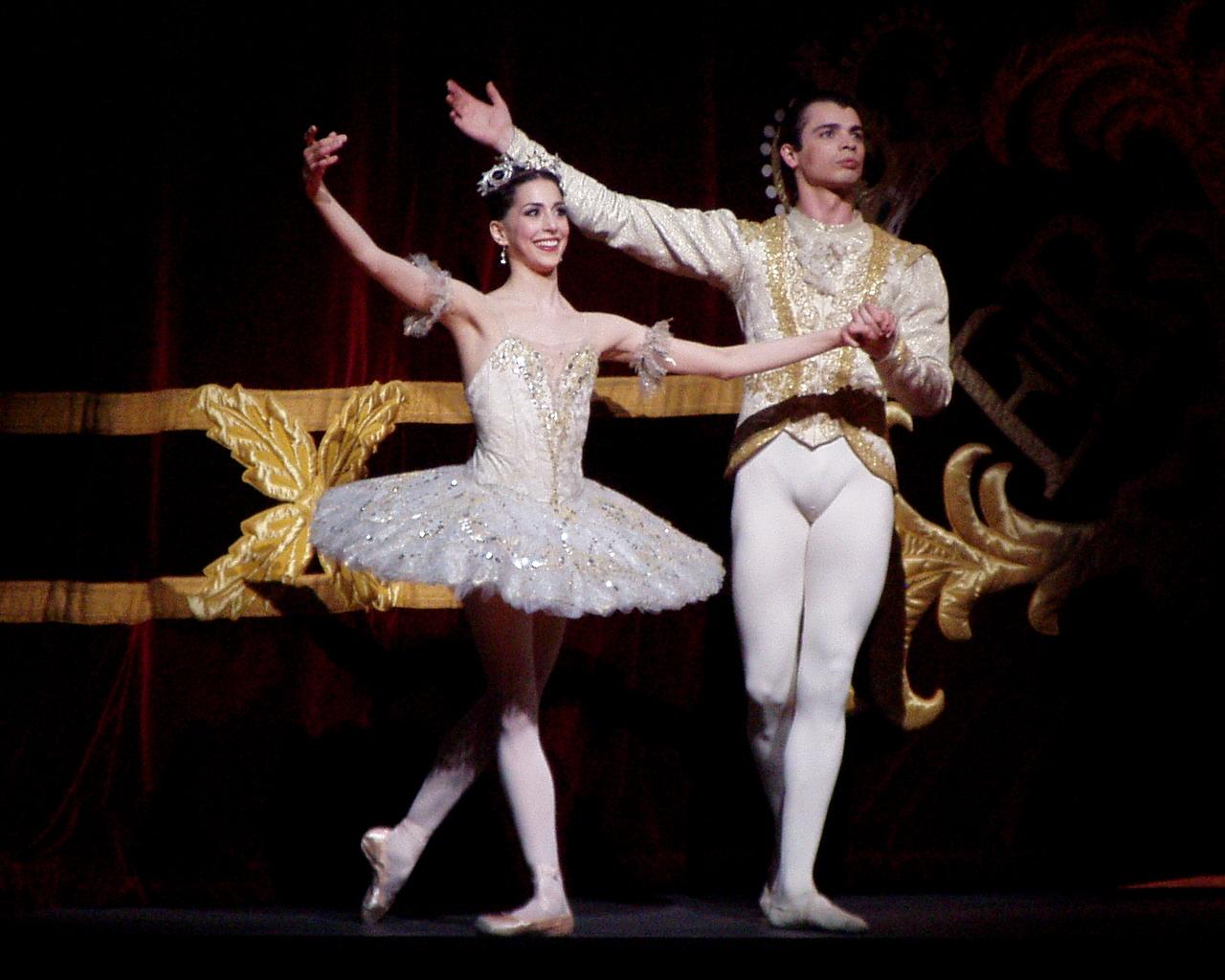
Composer: Pyotr Ilyich Tchaikovsky
-
"The Nutcracker Suite, Op. 71a: VII. Dance of the Reeds"
Two works by Tchaikovsky's deserve especial mention because of their enduring popularity in live performance and recorded music: the Piano Concerto No.1 in B flat minor, Op. 23 and the Violin Concerto in D Major, Op. 35.
The Piano Concerto was written towards the end of 1874. Considered worthless and unplayable by Nikolay Rubinstein (head of the Moscow Conservatory), whose advice Tchaikovsky had sought in connection with the solo part, the work has, nevertheless, continued to arouse popular enthusiasm and occasional critical disdain since its premiere in Boston, Massachusetts in 1875. Listen to the first movement of the concerto, where the memorable first theme uses material borrowed from a Ukrainian folk song—a melody that Tchaikovsky heard performed by blind beggar-musicians at a market in Kamenka (near Kiev).
Composer: Pyotr Ilyich Tchaikovsky
-
"Piano Concerto No. 1 in B-Flat Minor, Op. 23, TH 55: I. Allegro non troppo e molto maestoso - Allegro con spirito"
Composer: Pyotr Ilyich Tchaikovsky
-
"Piano Concerto No. 1 in B-Flat Minor, Op. 23, TH 55: II. Andantino semplice - Prestissimo"
As much as it is played today in concert halls all over the world, the violin concerto also received mixed reactions from the public and critics at its Vienna premiere in 1881. The influential critic Eduard Hanslick—a champion of Brahms's music—called it "long and pretentious" and said that it "brought us face to face with the revolting thought that music can exist which stinks to the ear." Hanslick also wrote that "the violin was not played but beaten black and blue," and labeled the last movement "odorously Russian."
Composer: Pyotr Ilyich Tchaikovsky
-
"Violin Concerto in D Major, Op. 35: III. Finale: Allegro vivacissimo"
The story of Tchaikovsky's death in St. Petersburg in 1893 is now generally known. It seems that a member of the nobility had threatened to complain to the Tsar about an alleged homosexual relationship between Tchaikovsky and his son. To avoid open scandal, a court of honor of Tchaikovsky's old schoolfellows met and condemned him to death, forcing him to take his own life. His death was announced as the result of cholera, and this official version of the event was, until relatively recently, generally accepted. His suicide, if that is what it was, came nine days after the successful performance in St. Petersburg of his Sixth Symphony. It brought to an end a career that was much more successful than the ones of his less professional contemporaries: the Mighty Five, led by Balakirev, a musician who unsuccessfully tried to bully and, at times, inspire Tchaikovsky into writing thoroughly Russian music. To the nationalists Tchaikovsky seemed too cosmopolitan; to foreign critics he could seem all too Russian. Nevertheless it is precisely the synthesis of Western European and Russian elements that has ensured him a lasting place in the history of music.