
Overview
Objectives
- Examine two specific types of blues to understand the musical form, instrumentation, harmony, and lyric content of each
- Consider the listenership of each type of blues music, examining how these musics were recorded, marketed, and consumed by both white and African American audiences
- Examine the specific aspects that are key to African American music, such as call and response and blue notes
- Identify the 12- bar blues form
- Identify the performers associated with rural blues
- Identify the performers associated with urban blues
Commercial or Arranged Blues
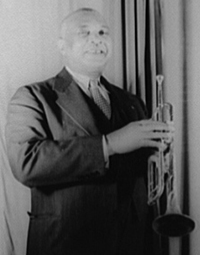
Much in the way that ragtime inspired many songs that were about ragtime but included very few musical characteristics of ragtime, the blues also inspired many popular songs by Tin Pan Alley and popular song composers. The most prolific composer of these songs was W.C. Handy, who churned out dozens of blues-inspired songs in the 1910s. His campaign song for E. H. Crump’s mayoral race became the famous "Memphis Blues ♫." Several more blues compositions followed, and in 1914, "St. Louis Blues ♫" took the world by storm. In no time at all, Handy was the darling of Tin Pan Alley. In fact, he was even called "the father of the blues," although it is probably more accurate to call him "the father of the arranged blues" because very few of his songs were in 12-bar blues forms.
Although not in the 12-bar blues form, "St. Louis Blues ♫" started a national craze for this new type of blues music. Tin Pan Alley composers began writing blues-inspired songs, before long, some 200 different blues titles appeared on Broadway, in sheet music, and on recordings. These songs were examples of commercial or arranged blues numbers, very few of which were in 12-bar form or included performative aspects like blue notes. Instead, these songs were inspired by the growing national interest in the blues.
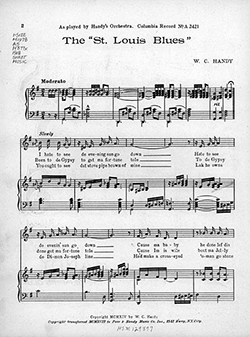



This short film St. Louis Blues (1929) starring Bessie Smith--and based on W.C. Handy's song of the same title--is the only known footage of her in existence.
