
Learning Objectives
- Outline the social, cultural, and political impact of WWI and WWII.
- Discuss the growth of the United States as a world power.
- Describe the impact of technological advancements on the development of music in the twentieth century.
- Describe, compare and contrast the main stylistic differences of Contemporary music styles including impressionism, post-Romanticism, serialism, and expressionism.
- Summarize the changing nature and application of the concept of tonality throughout the century.
- Discuss the impact of Claude Debussy's "Prelude to the Afternoon of a Faun" in light of the Symbolist movement in literature.
- Illustrate how the Russian composer Igor Stravinsky experimented with rhythm, new instrumental combinations, and the percussive use of dissonance, and discuss the impactof these techniques on contemporary music.
- Describe the impact of Arnold Schoenberg and the Second Viennese School on 20th-century music.
- Distinguish the main stylistic differences of nineteenth- and twentieth-century composers and styles.
- Describe the musical and political impact of “national schools” of composition that developed across Europe during the 20th century.
- Explain the impact of composer Aaron Copland on American contemporary music.
- Describe the impact of Latin American composers on the larger "art music" scene and repertoire.
- Define and analyze the main differences between jazz, ragtime, and blues.
Music of the 20th and 21st Centuries (1900-Present)
Currents in the New World: Jazz
One of the most important musical developments in the 20th century was the exponential growth and recognition of all kinds of popular music styles and genres. A study of the roots of American music and of the many different types of music and popular entertainment that have evolved over time—jazz, blues, gospel, country/western, rock and roll, acid rock, punk rock, hip-hop, etc.—would fill another course!
Nevertheless, there has been such a strong connection between jazz and music in the European classical tradition that we include here a brief overview of jazz music within the larger context of contemporary music.
Jazz is a style that features improvisation, meaning that performers do not play a given set of notes, but rather co-compose the music as they play, following a generally prescribed melodic and harmonic scheme. Jazz also features syncopated rhythms, which shift accents from the main beats (such as 1 and 3, in 4/4 time) to the weak beats (2 and 4). Syncopation frequently occurs between beats as well. Another frequently occurring rhythmic feature of jazz is swing, which is the lilting feel that results from the unequal division of beats (into "long–short–long–short"). Jazz evolved primarily in the American South among African Americans as a product of four different types of music: blues, spirituals, work songs, and ragtime.
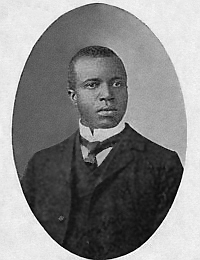
Ragtime, distinct from the other categories because the music is written down and not improvised, actually originated in the Midwest, particularly in Chicago. Black musicians enjoyed a practice called “ragging a tune,” which entailed improvising around popular melodies, spicing them up rhythmically and adding syncopation. Ragtime piano developed from this practice as entertainment for bars and brothels. It features a syncopated right hand and a “boom-chuck” bass, in which a low note is struck, followed by a chord in a higher register, in a steady “1–2–3–4” rhythm. A common term for this is “stride bass,” and the technique was used in later jazz styles as well. The syncopation in the right hand shifts emphasis within beats, so that in a series of rapid notes (typically, 16th notes), some that would correspond with the steady left-hand rhythmic pattern are left out and some that fall in between the left-hand notes are emphasized instead. Scott Joplin was one composer who took this popular commercial genre and turned it into an art form. Joplin's "Maple Leaf Rag" was published in 1899 and immediately became a bestseller.
You will hear four distinct sections in this piece, all the same length. The form may be labeled AA BB A CC DD, and this is typical for ragtime. Notice that the third new section, marked “C,” has a contrasting key and character. Listen for the stride bass and the right–hand syncopation.
Composer: Scott Joplin
-
"Maple Leaf Rag"
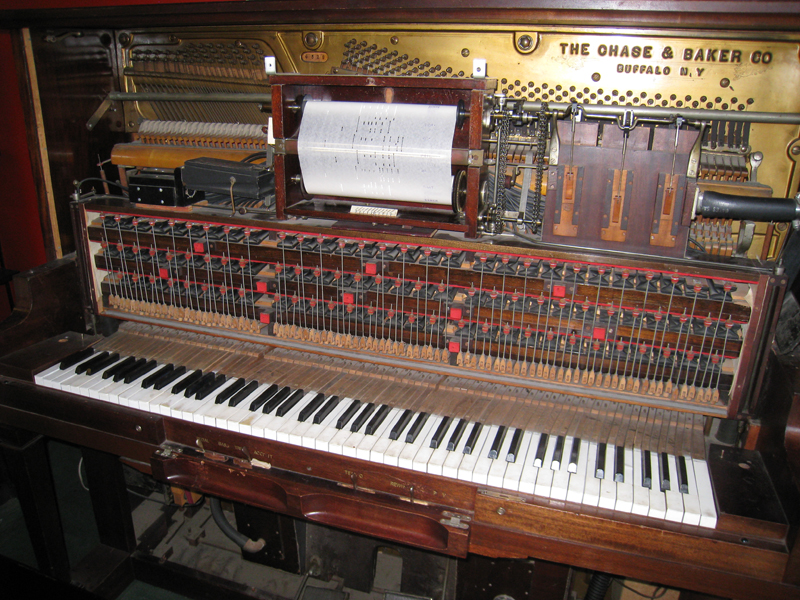
Some think of rags as very fast pieces, but Joplin always insisted they should be kept to a moderate speed. He brought grace and elegance to a genre that had been considered crass entertainment. Soon, parlors in homes across America were resonating with the sounds of ragtime, played on regular pianos or what were so-called “player pianos,” which operated mechanically. Before recording technology was widespread, player pianos provided a way to hear the latest hits as performed by superior artists—such as Joplin himself.
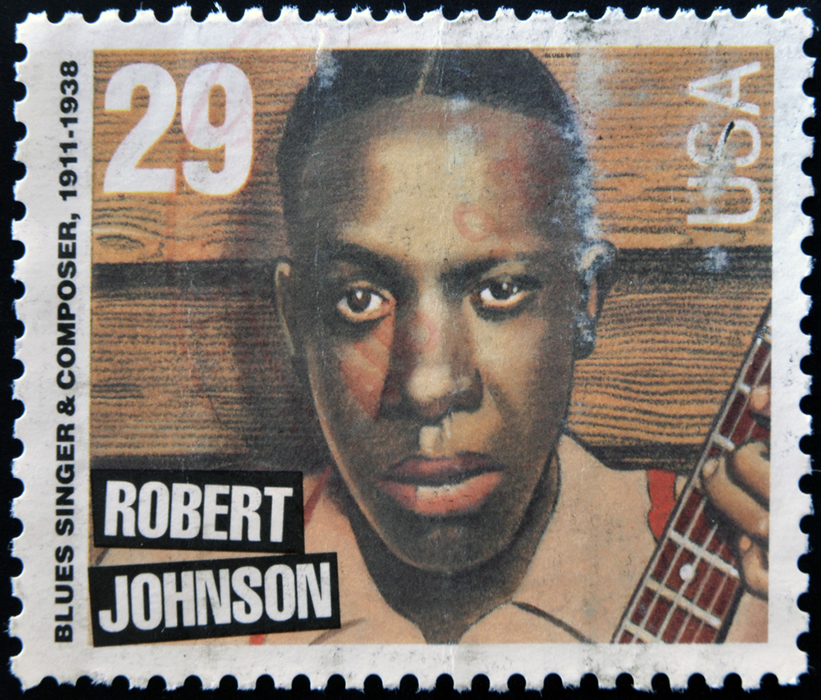
The blues, a style of African American folk singing that emerged around 1900, expresses trouble and hardship in a very personal and direct manner, often wrapped up with humorous banter and resilience in the face of it all. The melodies feature blue notes, which are lowered third, seventh, and sometimes fifth degrees of the scale. Early blues singers might perform with a small ensemble, such as piano plus trumpet, clarinet, or saxophone, or—particularly in rural areas—simply with a guitar. One blues pioneer was Robert Johnson, who displayed an enormous variety of original vocal and guitar timbres in his music. Johnson was from the Mississippi Delta region, birthplace of many of the best-known blues musicians.
Early jazz was centered in New Orleans, where “Dixieland” bands cultivated the art of group improvisation. Pianist Ferdinand “Jelly Roll” Morton (1890–1941) and trumpeter (and later singer) Louis Armstrong (1901–1971) were two key figures in this exciting new style. Chicago became an important jazz center as well, and the focus there shifted even more toward solo improvisation. Dance was an integral part of jazz, and in the 1920s and 1930s, big band arrangements by such figures as Fletcher Henderson (1897–1952), Edward Kennedy “Duke” Ellington (1899–1974), and Benny Goodman (1909–1986) were extremely popular in ballrooms and nightclubs in New York City and across the nation. Jazz brought performers and audience members from diverse communities together, and dance clubs provided rare venues for black-white integration in the first half of the 20th century.
From the 1920s onwards, many composers associated with the Western classical tradition looked for ways to incorporate jazz into their music. Debussy, Ravel, Stravinsky, and Copland, to name just a few, wrote compositions with strong jazz components.
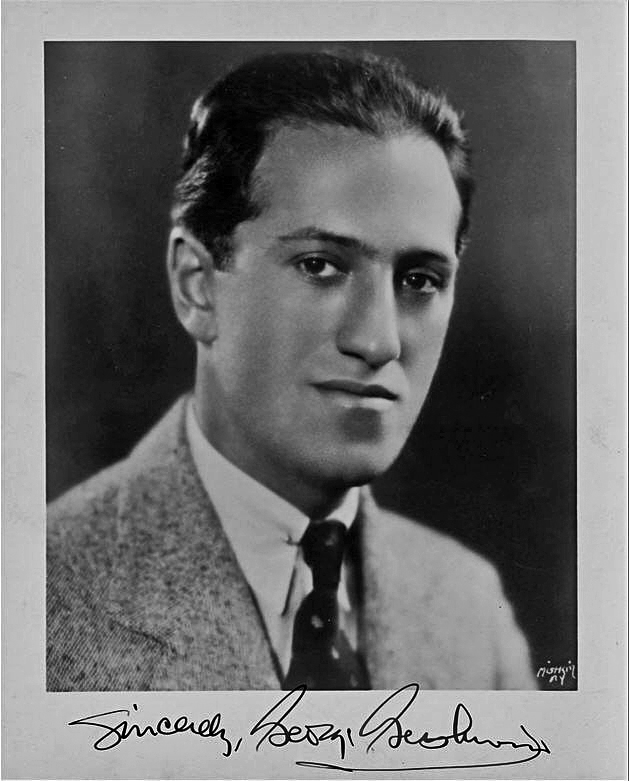
One composer who combined the sounds of jazz and Western traditional art music very successfully was George Gershwin, whose music extended from the Broadway stage to the concert hall in works such as An American in Paris and Rhapsody in Blue. His folk opera Porgy and Bess remains one of the most successful marriages of classical form and popular style.
Composer: George Gershwin
-
"Rhapsody in Blue"
Composer: George Gershwin
-
"An American in Paris"
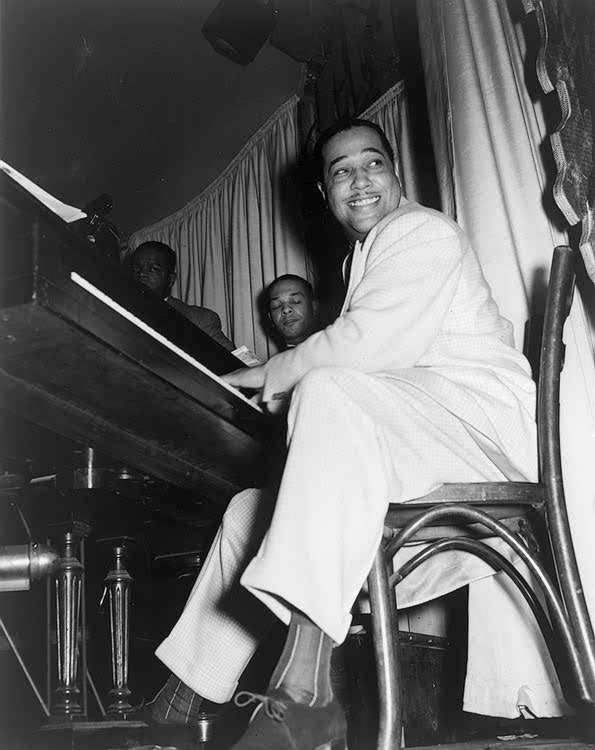
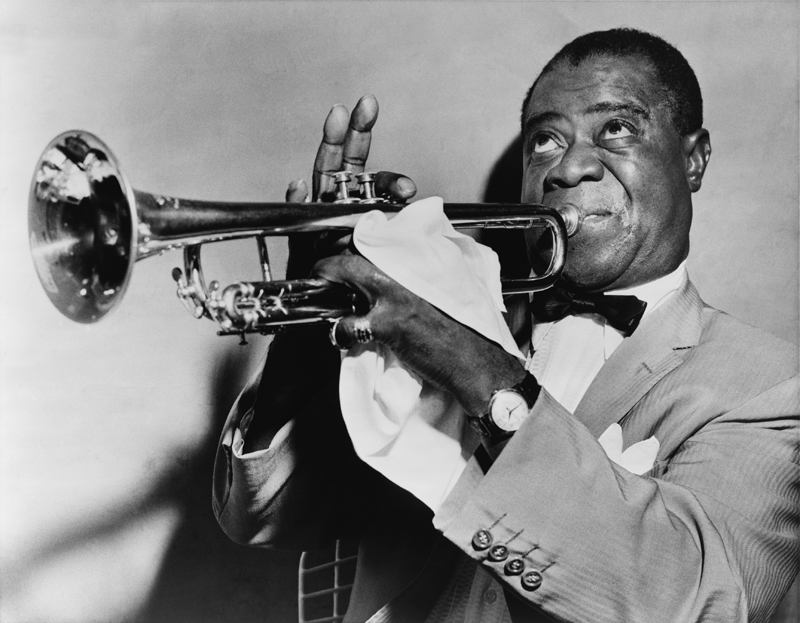
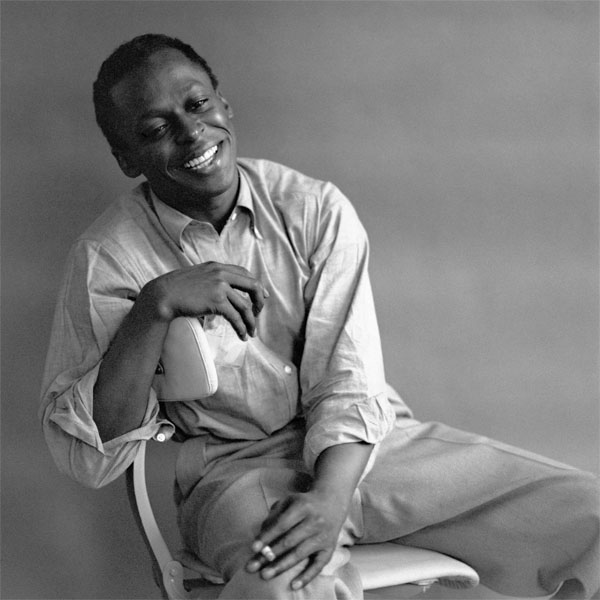
After World War II, jazz groups became smaller and there was more emphasis on improvisation. Performers such as Charlie "Yardbird" Parker (1920–1955), John Coltrane (1926–1967), Miles Davis (1926–1991), and Thelonious Monk (1917–1982) created the style known as “bebop,” which took jazz out of the dance realm and treated it as a pure art form. Bebop featured small instrumental groups (known as “combos”), highly virtuosic playing, wide melodic leaps and dissonance, and unpredictable rhythms. Performers such as Ornette Coleman (b. 1930) took up “free jazz,” in which improvisation shook loose from established chord progressions and melodies.
Jazz incorporated other genres of music as well. Antonio Carlos "Tom" Jobim (1927–1994) and Stan Getz (1927–1991) introduced Latin jazz, a mixture of jazz and Latin American music. Current Latin jazz artists include Poncho Sanchez (b. 1951) and Arturo Sandoval (b. 1949). Afro-Cuban jazz was made popular by such musicians as Mario Bauza (1911–1993), Dizzy Gillespie (1917–1993), Frank Grillo "Machito" (ca. 1908–1984), Chico O'Farrill (1921–2001), and Tito Puente (1923–2000). Fusion, a synthesis of jazz and rock, may be heard in the music of Chick Corea (b. 1941) and in Miles Davis's later works.
Today, jazz flourishes in many forms. As lines between genres blur and artists of various persuasions continue to “cross over,” jazz—America's unique creation—continues to evolve and to influence music worldwide.