Learning Objectives
- Outline the social, cultural, and political impact of WWI and WWII.
- Discuss the growth of the United States as a world power.
- Describe the impact of technological advancements on the development of music in the twentieth century.
- Describe, compare and contrast the main stylistic differences of Contemporary music styles including impressionism, post-Romanticism, serialism, and expressionism.
- Summarize the changing nature and application of the concept of tonality throughout the century.
- Discuss the impact of Claude Debussy's "Prelude to the Afternoon of a Faun" in light of the Symbolist movement in literature.
- Illustrate how the Russian composer Igor Stravinsky experimented with rhythm, new instrumental combinations, and the percussive use of dissonance, and discuss the impactof these techniques on contemporary music.
- Describe the impact of Arnold Schoenberg and the Second Viennese School on 20th-century music.
- Distinguish the main stylistic differences of nineteenth- and twentieth-century composers and styles.
- Describe the musical and political impact of “national schools” of composition that developed across Europe during the 20th century.
- Explain the impact of composer Aaron Copland on American contemporary music.
- Describe the impact of Latin American composers on the larger "art music" scene and repertoire.
- Define and analyze the main differences between jazz, ragtime, and blues.
Music of the 20th and 21st Centuries (1900-Present)
Currents in the New World: Musical Theater
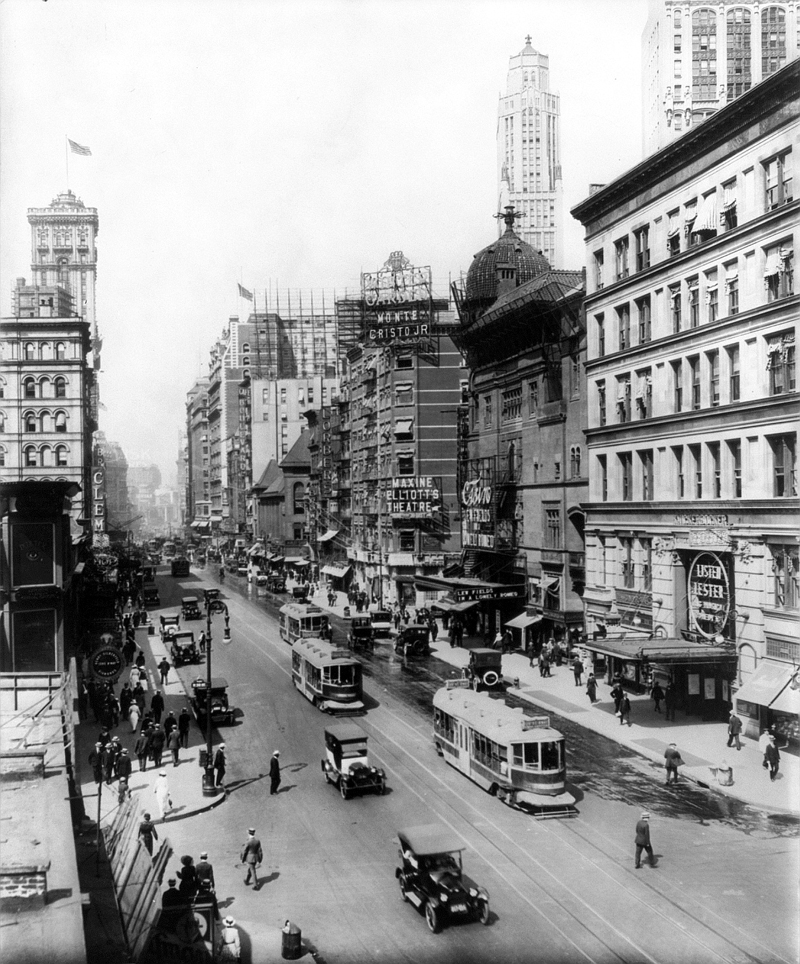
In addition to jazz, another uniquely American art form that developed in the 20th century was the musical, often called the "Broadway musical" after the street in New York City with the greatest concentration of theaters. The Broadway musical tradition can be traced to the New York premiere of John Gay's Beggar's Opera at the Nassau Theater, Manhattan, in 1751. By 1900, the modern musical had evolved into the tuneful, stylish, "native American" bourgeois operettas of Gustave Kerker (1857–1923) and Victor Herbert (1859–1924), and even though its main predecessor was European operetta—a lighter form of opera—the musical departed from that genre by using more approachable plots and characters, simpler spoken dialogue, and memorable melodies with straight-forward harmonies and forms. Songs were written in a narrower pitch range to accommodate the different (nonoperatic) vocal technique; many of them took on a life of their own, assuming a fame and significance outside the context of the musical for which they were composed.
Musicals went through a "golden era" from 1920 to 1960. In the early years, plots tended toward a simple "boy meets girl" theme. A turning point came with Show Boat with music by Jerome Kern (1885–1945) and lyrics by Oscar Hammerstein (1895–1960). Show Boat wove complex characters into an intricate, moving storyline that included an examination of racial prejudice. Since the 1930s, social commentary has been a more frequent component of musical theater, though many shows continue to be created purely for entertainment.
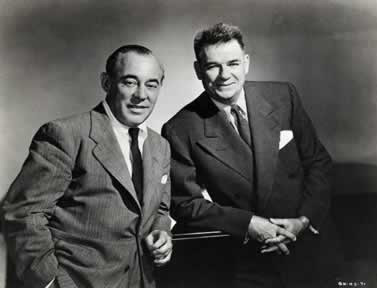
In 1943, choreographer Agnes de Mille transformed musical theater by integrating ballet into the plot of Oklahoma!, a musical by the tremendously productive duo of composer Richard Rodgers (1902–1979) and lyricist Oscar Hammerstein.
The musical developed into a wildly successful genre that was exported throughout the world and continues to thrive today. Initially set mainly in American settings, after the Second World War, musicals were set increasingly in other countries. The King and I (Rodgers and Hammerstein; 1951) was set in Siam (today's Thailand), My Fair Lady (Frederick Loewe and Alan Jay Lerner; 1956) was set in England, and Fiddler on the Roof (Jerry Bock and Sheldon Harnick; 1964) was set in Russia. By this time, most of the popular melodies heard on the radio originated from Broadway shows or were written by musical composers such as Cole Porter (1862–1964), Irving Berlin (1888–1989), or Hoagy Carmichael (1899–1981).
More than 2,000 productions were staged in Broadway during the twentieth century. In some way or another, all of them owed something to the time-honored traditions of pantomime, ballet, Viennese operetta, English comic-opera, vaudeville, and farce. Only fifty or so of these musicals, however, enjoyed initial runs of more than five hundred performances, and far fewer were blockbusters on a par with productions such as Show Boat, Oklahoma!, Kiss Me, Kate, South Pacific, My Fair Lady, West Side Story, The Music Man, The Sound Of Music, or Funny Girl.