Overview:
Visual art is everywhere; it is a means of communication that is immediately apparent in many of the everyday elements of life. The food we eat, the clothes we wear, the websites we navigate, visual arts is immediately perceived by the eye. In many ways, visual art is life itself, because we live with it every day.
Young students are innately connected to visual arts in the same ways they are connected to music. Making art, as in making music, helps to develop students’ motor skills, language, creativity, and decision-making processes. Most importantly, the visual arts are a means of visual learning in which students develop visual-spatial skills.
Visual art and music stimulate exploration, a natural activity in young children. The visual arts provide the freedom for students to manipulate different materials visually, in unstructured ways that allow for self-directed experimentation as well as the development of skills for life and learning.
Objectives:
Students will be able to:
- Articulate teaching approaches for preparing students to take part in visual activities.
- Identify effective age-appropriate introductory visual arts activities.
- Identify ways in which the visual arts can teach music elements.
- Describe the best practices for leading visual arts and music activities.
- Identify and describe the assessment of visual activities.
Form and Expression
Like the visual arts (painting, sculpture, architecture, etc.), music has a basic structure composed of different elements or parts arranged to make a unified work; this is form. And, as in all the arts, form is achieved by unity and variety through repetition and contrast.
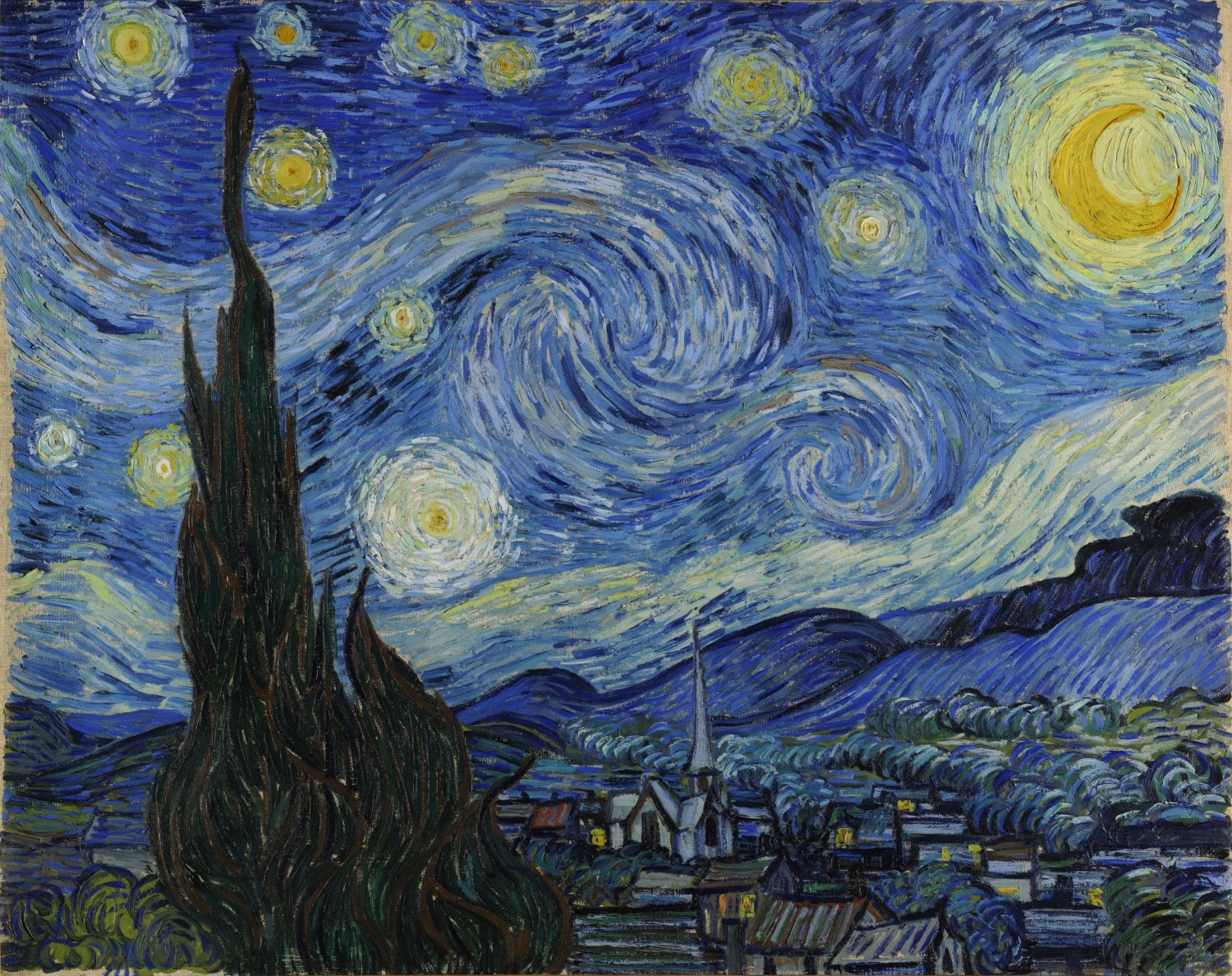
In the example below, Van Gogh demonstrates a sense of unity through the use of energetic strokes and curved lines throughout the work, while variety and contrast are present in the colors of the bright stars against a dark sky. Form in art is similar to that in a musical work in which sections of the piece are tied together (unified) through a melody that reoccurs throughout, contrasted by different melodies, themes, motives, or "tunes". The following examples show a motive from Bizet's opera Carmen. Can you tell how many times this unifying melody occurs in the work?
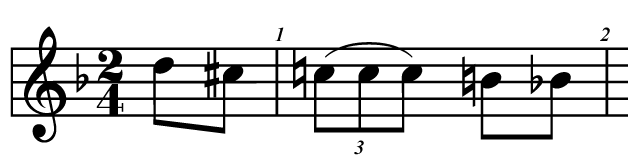
Carmen - Habanera (Bizet; Anna Caterina Antonacci, The Royal Opera)
The smaller elements of form (motive and phrases) are brought together into sections, which in turn combine in a variety of ways into the larger form. These can be graphically and visually represented in a variety of ways.
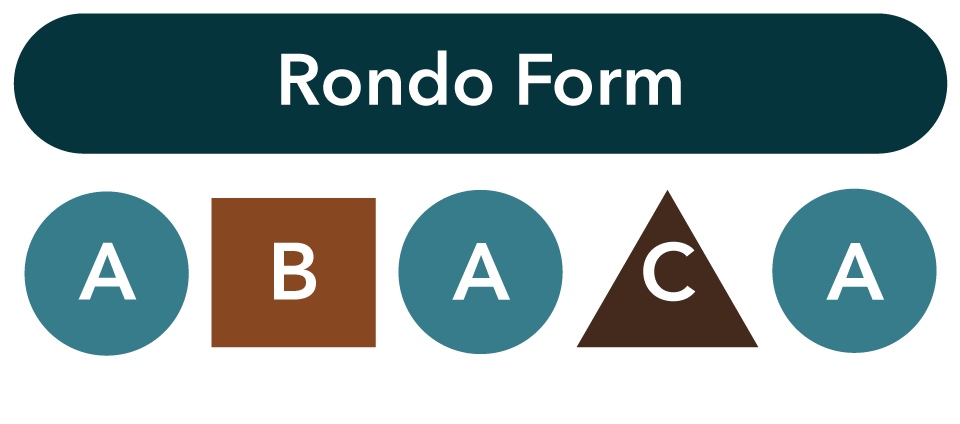
In learning form, students often are asked to demonstrate what they hear and understand through overt behavior such as playing instruments, displaying body movements, or identifying visual representations, such as icons. Students can be encouraged to draw simple shapes such as circles, triangles, and squares to demonstrate the form of a piece as they listen, draw a storyboard as they listen, or create a listening map or call chart. This type of active learning helps the students identify and understand what they perceive through their senses.
Visual representations are particularly effective approaches to making the concept of form more concrete. The students might:
- Illustrate or draw representations of form
- Manipulate shapes or letters while they are listening. For example, a square might represent the opening section of the music, and a circle, the contrasting section
- Visually represent same and different with shapes or pictures
- Become aware of melodic contour as an aid to analyze form by tracing the notes in a melody, like a connect—the—dots drawing
Expression
Visual comparisons of dynamics, tempo, and articulation are always effective methods of relaying expressive concepts to students. Note the following comparisons.
This can be extended by having students react to program music by creating a drawing of a scene or scenes. For example, students can draw snow scenes while listening to “Snow is Dancing” from Debussy’s Children’s Corner Suite.