
Overview:
Every school curriculum has an important emphasis on drama, language arts, and literature. Integrating these subjects with music into the curriculum taps into all students’ desire for active learning through the senses. Students learn more deeply and meaningfully. Integrating drama, language arts, and literature with music can bring lessons to life, help students apply critical thinking skills, and stimulate learning across the curriculum.
Objectives:
Students will be able to:
- Articulate teaching approaches for preparing students to take part in drama, language arts, and literature activities.
- Identify effective age-appropriate introductory drama activities.
- Identify effective age-appropriate introductory language arts activities.
- Identify effective age-appropriate introductory literature activities.
- Identify ways in which drama, language arts, and literature can teach music elements.
- Compare and contrast different types of drama, language arts, and literature activities.
- Identify and describe the assessment of drama, language arts, and literature activities.
Introduction
Music, Drama, and Language Arts in the Classroom
Creative drama, theater elements, and language arts can easily be integrated into the classroom. Many ideas related to characterization and communication of emotion can become part of music lessons.
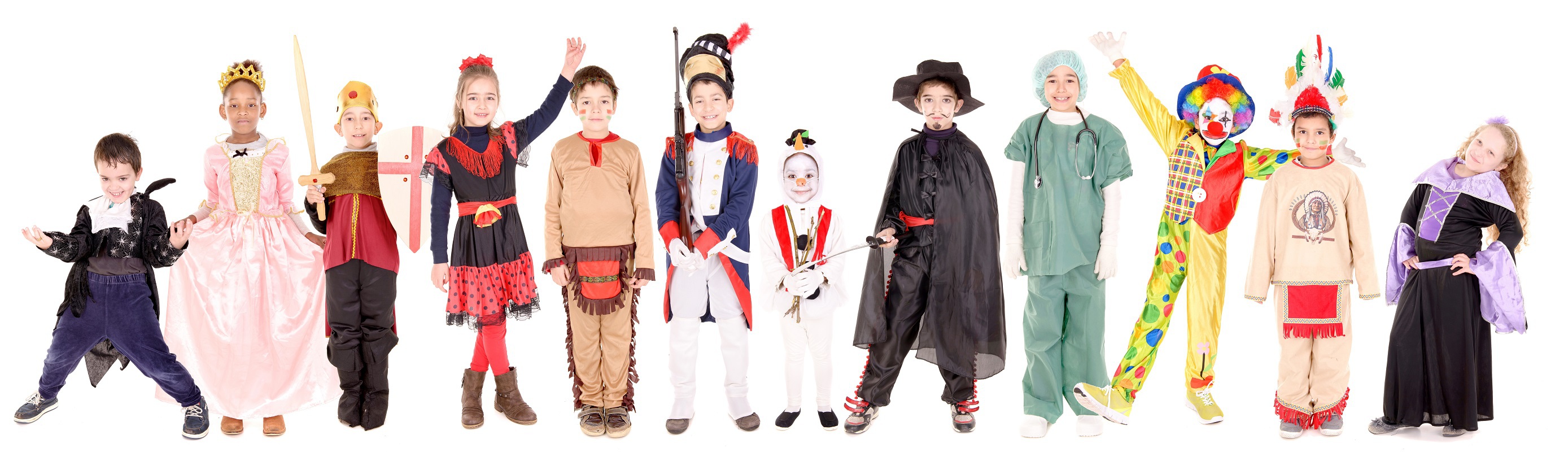
Students’ creative imaginations are the result of their play activities. When young children engage in games and songs, they explore, invent, and create new ways to control and organize sounds. Creativity is a direct and immediate means of self-expression and self-discovery in music. The elementary teacher can be an effective guide for stimulating musical growth by designing and shaping activities that enable the expansion of creativity and artistic development of all students through drama.
- Students can learn the stories of programmatic music or operas. The teacher can play the music and discuss with the class how the music portrays or enhances the experience of the story. The teacher could lead the discussion to the use of musical devices as well as theatrical devices for portraying the story.
- The students could create a musical about U.S. history or the history of their state or region. Music and folk dances that students have learned in their music classes could be used. Students could incorporate all the aspects of drama in creating a musical.
- The teacher can select songs that describe characters or tell stories, including story songs from various cultures. The discussion should focus on the characters, their motivations, actions, and how the characters or plot of the poem could change.
Teaching Drama and Language Arts with Musical Concepts
In the early primary grades, the teaching of language arts focuses on learning the low-level skills of reading, grammar, punctuation, printing and writing, and spelling. Because language arts, however, shares common elements with music, music can stimulate students desire to learn these necessary skills.
 Elements of Language Arts
Because people experience music, its integration with drama and language arts are more easily taught through experiences that utilize more than one musical element. Several of the following activities can be implemented to different effect depending on which subject area or musical element the teacher wishes to emphasize.
Rhythm, Melody, Form, and Expression
To increase students' awareness of the beat, the teacher should begin by asking questions such as "Who could find the steady beat in this poem?" Questioning in this manner will help to direct the students' attention to the specific concept and to think more critically about the rhythmic pulse.
The teacher can then draw the students' attention to the music, heightening their awareness that the music has not only beat/pulse but also sound and silence, much like poetry and words. Through instruction to listen, respond physically to the sounds and silence, and to internalize these musical concepts, the student will be able to determine more successfully if the music has a steady beat.
By using chant, students can concentrate on the rhythmic aspects of the music rather than the melodic characteristics as the teacher is demonstrating in this movie.
Teachers should encourage students to respond physically in a variety of ways to heighten the drama and meaning of the words and the underlying pulse. Students can chant words to a steady beat and determine how many sounds occur for each word.
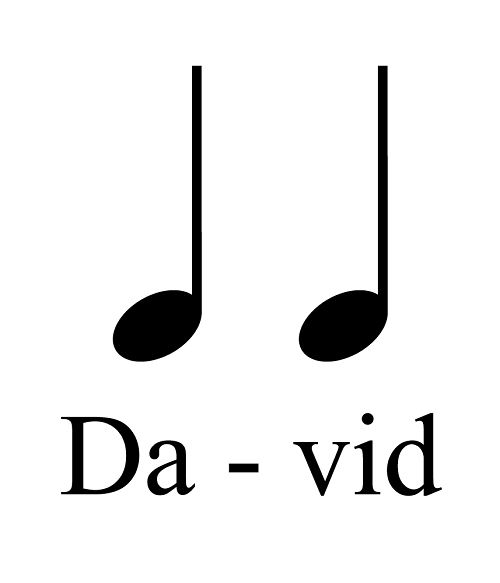
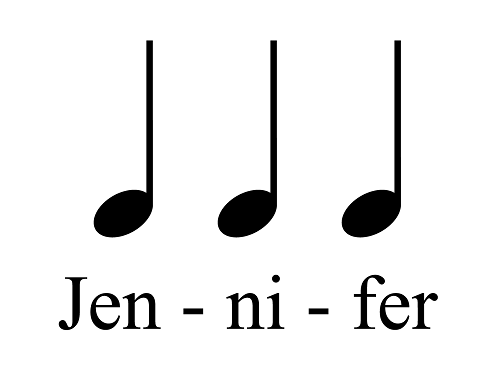
Guiding the students to chant the words of a familiar rhyme can be followed by more physical actions such as clapping or patsch. Once the pulse is established, the students will feel it even though no words are sung or spoken, strengthening the development of students' audiation abilities. This will also help students to become aware that the pulse is ongoing and that the words have a rhythm that is distinct from the pulse. Observe the students' response in this activity.