
Objectives
- Outline the social, cultural, and political impact of WWI and WWII.
- Discuss the growth of the United States as a world power.
- Describe the impact of technological advancements on the development of music in the twentieth century.
- Describe, compare and contrast the main stylistic differences of Contemporary music styles including impressionism, post-Romanticism, serialism, and expressionism.
- Summarize the changing nature and application of the concept of tonality throughout the century.
- Discuss the impact of Claude Debussy's "Prelude to the Afternoon of a Faun" in light of the Symbolist movement in literature.
- Illustrate how the Russian composer Igor Stravinsky experimented with rhythm, new instrumental combinations, and the percussive use of dissonance, and discuss the impactof these techniques on contemporary music.
- Describe the impact of Arnold Schoenberg and the Second Viennese School on 20th-century music.
- Distinguish the main stylistic differences of nineteenth- and twentieth-century composers and styles.
- Describe the musical and political impact of “national schools” of composition that developed across Europe during the 20th century.
- Explain the impact of composer Aaron Copland on American contemporary music.
- Describe the impact of Latin American composers on the larger "art music" scene and repertoire.
- Define and analyze the main differences between jazz, ragtime, and blues.
Contemporary Period: Igor Stravinsky
Igor Stravinsky (1882-1971)
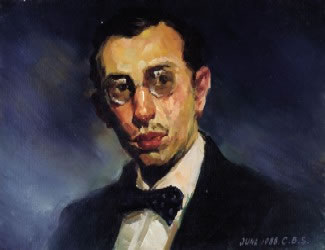
At the beginning of the 19th century, Beethoven almost single handedly ushered in a new musical era. One hundred years later, Schoenberg and Igor Stravinsky (1882-1971) found themselves in a comparable position. The pioneers of a new era of composition, the two men had very different views of the direction the music should take. Each composer came from a strong tradition: Schoenberg from the German Post-Romantics, and Stravinsky from the French Impressionists and the Russian nationalists. Those two traditions were at odds well before Schoenberg and Stravinsky composed their first groundbreaking works in 1910. Regarded by many as the greatest composer of the 20th century, Stravinsky’s music encompasses every major music genre and style.

Regarded by many as the greatest composer of the 20th century, Stravinsky’s music encompasses every major music genre and style...

Stravinsky was born near St. Petersburg, Russia in 1882. Although his father was a singer in the Imperial Opera, both of his parents wanted him to pursue a career in law; therefore, he began a legal education at the University of St. Petersburg. At the same time, he continued to practice his music on the side, and eventually accepted as a composition student by Rimsky-Korsakov, with whom he studied for three years. It quickly became clear that he was meant to be a composer, not a lawyer.
His first major achievements were three commissions from Sergei Diaghilev (1872-1929) for one of the premiere ballet companies in all of Europe, the Ballet Russes. The resulting ballets, Firebird (1910), Petroushka (1911), and Le Sacre du Printemps (The Rite of Spring - 1913), established the composer’s fame as a leader in new music. Within just a few years, Stravinsky’s style in progressed dramatically from impressionism to an avant-garde style, which foreshadowed the music of the mid to late 20th century. The Rite of Spring (1913) for example, is viewed as an example of primitivism for both its subject matter (a virgin sacrifice in a primal culture) and for the brutal rhythms and harmonic structures.
While the subject, rhythm, and harmonic structure of his ballets are undoubtedly new, the compositions did retain the massive orchestras of Mahler’s earlier works. Stravinsky later turned to smaller ensembles; however, the impact of those first works was immediate and substantial. At the Paris premiere of The Rite of Spring, a riot erupted during the performance. Although now the violent reaction of the normally placid Parisian audience is attributed more to Vaclav Nijinsky’s modern choreography than to Stravinsky’s music, the brashness and shocking originality of the music undoubtedly encouraged the crowd’s histrionics.
The outbreak of World War I forced Stravinsky and his wife to move to Switzerland, and the Russian Revolution ensured that they could not return home. As postwar economic conditions made it difficult to stage works as large as Petroushka, his works after The Rite became smaller, more musically efficient, and more along the lines of Classical style. Works including L’Histoire du Soldat (A Soldiers Tale, 1918), Les Noces (The Wedding, 1923), and Oedipus Rex (1927) adapted classical forms to the dramatic needs of the subject matter. Works like the Symphony for Wind Instruments (1920), Concerto for Piano and Winds (1924), Symphony of Psalms (1930), Symphony in C (1940), and the Symphony in Three Movements (1945) are all Classical in form and mood even though they break the mold of traditional tonality.
These works from Stravinsky’s middle stage usher in the Neoclassical period of 20th century music. Characterized by a return to the style and absolute forms of the Classical era within the framework of 20th century compositional techniques, Neo-Classicism was a reaction against the emotionalism of Romantic-era music. Furthermore, this new style also sought to explore the possibilities of timbre produced by solo instruments in small ensembles.
In 1939, World War once again forced Stravinsky to move. This time, he relocated to the United States, settling in Los Angeles where he remained until his death at 89. Ironically, Stravinsky moved to within several miles of Schoenberg, but, although the two men never disliked each other, the substantial differences in their approaches to composition kept them apart. Although Stravinsky admired Schoenberg’s work, he did not apply serial techniques until after Schoenberg’s death in 1951.
Stravinsky began to use serial techniques in some of his works, such as Agon (1957) and Threni (1958). He did not attempt to ‘steal’ ideas from Schoenberg, but rather remolded them into his own style. In fact, his approach to serialism owes more to Anton Webern than to Schoenberg. Indeed, the rhythmic structures of Canticum Sacrum or any of the later works show that the essence of Stravinsky’s compositional style did not change with his adoption of serialism.
Composer: Igor Stravinsky
-
"Firebird"
Composer: Igor Stravinsky
-
"Petrushka: First Tableau: The Shrovetide Fair"
Composer: Igor Stravinsky
-
"Le Sacre Du Printemps (The Rite Of Spring): Part I: The Adoration of the Earth"
Composer: Igor Stravinsky
-
"Symphony in C major: III. Allegretto"
Composer: Igor Stravinsky
-
"Symphony in 3 Movements: Andante"
Composer: Igor Stravinsky
-
"Symphonies Of Wind Instruments"
The Influence of Stravinsky
Although his style changed over the years (from the Impressionism of Firebird, the primitivism of Rite of Spring, the Neoclassicism of the Symphony in C, or the serialism of Threni), the essence of his music—the transformation of rhythm, timbre and harmony through layering and asymmetry—remains the same through all of the style changes. This consistency alongside adaptability enabled Stravinsky to accomplish a revolutionary transformation of music without discarding the basic concepts that governed its creation.
One of Stravinsky's innovations is his use of polyrhythms, rhythms where several divisions appear simultaneously. In the Rite of Spring, listen to the interplay within the woodwinds in the opening measures or the layering of rhythms later in the movement. Another rhythmic novelty is Stravinsky's use of mixed or complex meters. This passage alternates rapidly between duple, triple, and quadruple meters. In yet another section we hear his use of rhythmic ostinatos, asymmetric passages that use accents within a standard meter to give the impression of shifting meter.
Harmonically, Stravinsky is similarly creative in transforming traditional tonality into something fresh and stimulating. He often accomplishes this task with polytonality, when more than two keys sound simultaneously, as in this passage from Petroushka. The excerpt that we heard earlier from The Rite of Spring, despite all of its dissonance, is simply an E-flat dominant seventh chord layered over an E major chord.
The Russian nationalists Mussorgsky and Rimsky-Korsakov strongly influenced Stravinsky. Although his music cannot be considered as truly nationalistic, the at-times naïve or unsophisticated quality of his melodic choices is often attributed to Russian folk music. For example, The Song of the Volochebniki from Petroushka comes directly from a Russian Orthodox carol for Easter.
Stravinsky, a man who admired tradition but craved change, was a unique composer in a unique time. His influence extended beyond music to other arts, including choreography (Nijinsky, Diaghalev, Georges Ballanchine) literature (Charles-Ferdinand Ramuz, Andre Gide, W.H. Auden, Jean Cocteau), and art (Pablo Picasso). Stravinsky believed that in all art, total freedom meant anarchy; in order to be completely liberated, the artist must set limits. Igor Stravinsky’s utter dedication to his art made him the single most revered composer of the 20th century.



