
Objectives
- Explain how the Classical period (1750-1825) characteristics of order, objectivity, and harmonious proportion relate to the music characteristics of the period.
- Summarize how the American Revolution (1775-83) and the French Revolution (1789-99) profoundly changed political systems and social order.
- Classify the large-scale musical forms in which the Classical masters composed.
- Explain music making in the context of the royal court and the patronage system.
- Define form and absolute music, and relate these concepts to one another.
- Differentiate between the main musical forms of the Clasical-era by summarizing the development of the symphony, sonata, string quartet, and the concerto.
- Define and analyze the symphony, sonata, string quartet, and concerto forms in the context of the Classical period.
- Describe the impact of the major Classical composers Haydn, Mozart, and Beethoven.
- Discuss the impact of Beethoven's thirty-two piano sonatas.
- Compare and contrast the two types of Italian opera: opera buffa and opera seria.
The Classical Period (1750-1820): Introduction
During the Classical Period, also known as the Age of Enlightenment or the Age of Reason, scientists and philosophers moved toward a more rational view of the universe. The growing demands of the emerging middle classes for equality and fraternity, led to two major revolutions. The most vocal advocates for middle class rights were the writers of the Enlightenment. The transfer of power from the aristocracy to the middle class coincided with a transfer of wealth made possible by the Industrial Revolution .
Towns grew, trade flourished, fortunes were made, and the bourgeoisie (the middle class) enjoyed a newfound, previously unheard-of economic power. The eighteenth century was also a period of vigorous intellectual activity. Scientific advancement continued with great speed.

“Towns grew, trade flourished, fortunes were made, and the bourgeoisie (the middle class) enjoyed a newfound, previously unheard-of economic power.”

The French Revolution
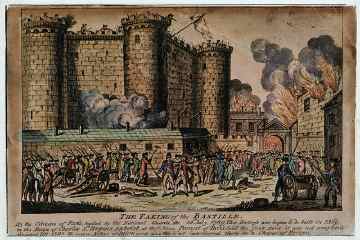
Arguably, the most significant event in Europe during the classical period was the French Revolution, a period of political upheaval in France that lasted from 1789 until 1799. In 1792, the Revolution established a new French Republic that experienced violent periods of political struggle between various liberal assemblies fighting to transform France into a democratic and secular society, and right-wing supporters of monarchical ideals intent on blocking them. King Louis XVI was beheaded in January 1793, and his wife Marie Antoinette in October of that same year. The vacuum left by the destruction of the monarchy led to decades of political instability, not only in France, but in many other parts of Europe.
In 1799, Napoleon Bonaparte, who by then had become a national hero through various successful military campaigns, led a coup that established him as the First Consul of the Republic—practically the head of the state. Later, in 1804, he became the First Emperor of the French. Unfortunately, the so-called Napoleonic Wars that followed meant that more years of war lay ahead for France and Europe.
The full impact of the revolution would not be felt in the artistic community until the next generation, but the era in which composers could rely solely on aristocratic patronage was nearing its end.
The American Revolution
Across the Atlantic, England was dealt its most crippling blow by the American Revolution (1775-1783), which signaled the beginning of the end of the British Empire.
Philosophy and Science
The realm of science witnessed some tremendous advances during the classical period: Benjamin Franklin published his first writings on electricity; the steam engine, the modern factory, the electric battery, the steamboat, and the cotton gin were all invented; discoveries included oxygen, and hydrogen. There were also some important archeological findings; one of the most monumental was that of the ruins of Pompeii.
Great intellectual and philosophical minds influenced the Age of Enlightenment.
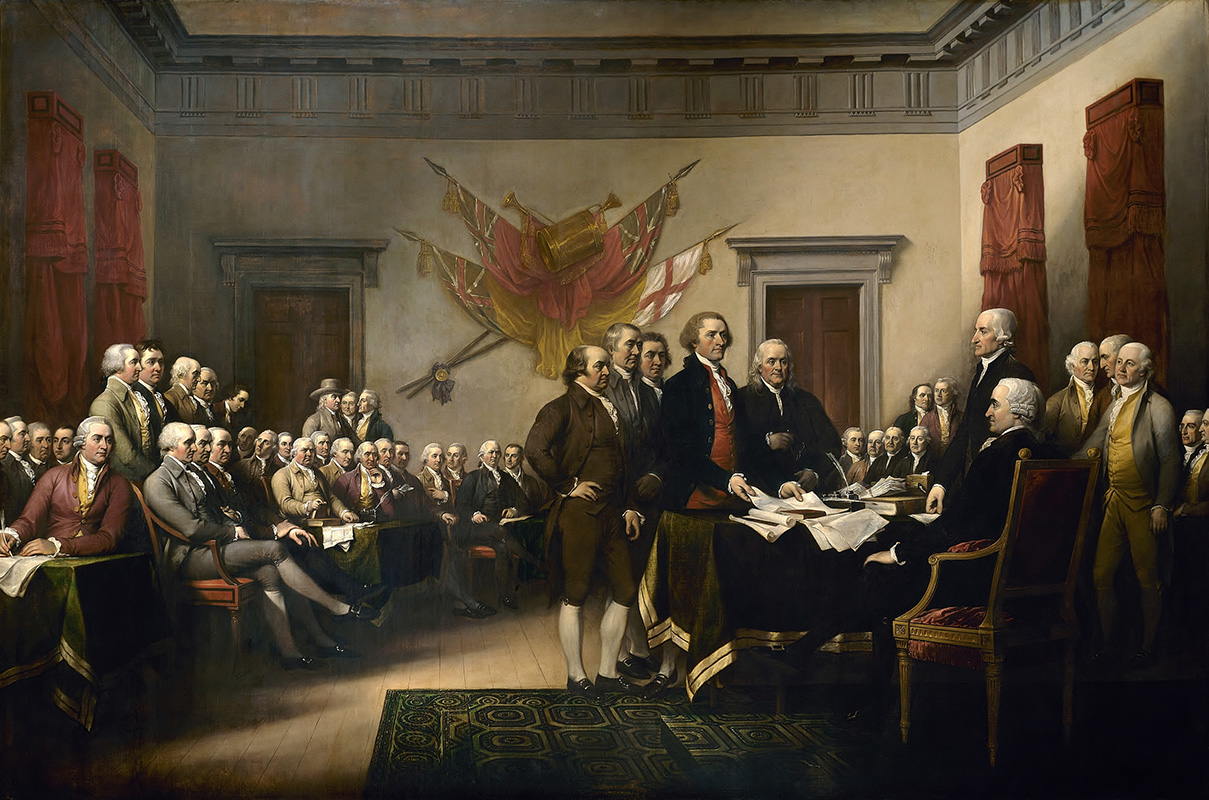
Among them were two French philosophers, Jean-Jacques Rousseau (1712-1778) and François Voltaire (1694-1778), whose writings helped establish the French rococo. Other important philosophers and writers of the time include David Hume (1711-1776) and Immanuel Kant (1724-1804).
Although a strong belief in God remained, people were also confident believers in human control over a reasonable world, and in the marvelous machine of a universe they thought they understood. God was no longer the awesome Father and Judge so much as the cosmic keeper of the seasons and rhythms of nature.
Changes in European Art
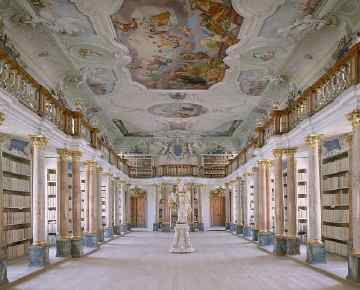
Changes in European culture began in France, where artists and writers found simpler and more reasoned means of expression. This period, a reaction against the baroque called the rococo, began around 1720, and was the precursor of the Classical period.
Rococo art tended to be playful, ornate, and devoid of the grandeur associated with the Baroque. In Germany, a parallel development was Empfindsamkeit, translated roughly as sensibility, reflecting the interest in a new sensitive style.
The rococo style emphasized elegance, delicacy, softness and playfulness. Interiors were decorated with beautiful gold and white curved woods, crystal chandeliers, pastel colors, and gilt ceilings.
“Rococo art tended to be playful, ornate, and devoid of the grandeur associated with the Baroque...”



