
Overview
Despite their apparent stylistic diversity, different jazz pieces share common elements, such as improvisation and swing feeling, and on a more basic level, common forms and instrumentation. This section’s focus on form and timbre in jazz will hopefully give you a deeper understanding of jazz improvisation. To fully appreciate jazz improvisation, you should be familiar with the standard jazz forms, the sound of various instruments and their role in an ensemble—whether a musician is playing written parts or improvising.
This section also looks at the various cultures that contributed to the early development of jazz’s distinctive style and flavor. Learning where and how jazz was first created will help you understand it better.
Objectives
Upon completion of this part of the lesson, you will be able to do the following:
- Recognize the standard forms of jazz.
- Understand the roles of the various jazz instruments.
- Identify the sounds of these instruments.
- Identify the cultural origins of jazz.
- Identify the musical contribution of brass bands to jazz.
- Identify the significance of ragtime music.
- Identify the blues as a musical style.
- Identify some call-and-response genres that predate jazz.
- Identify New Orleans as a fertile culture that “birthed” jazz.
Standard Forms
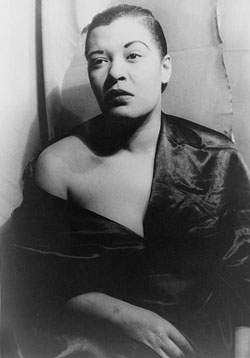
The two principal formsThe overall structure or layout of a piece of music. of jazz music are the 12-bar blues form A song form typically consisting of three 4-bar phrases, represented as AAB.and the 32-bar song formA song form typically consisting of four 8-bar phrases, represented as AABA.. These two forms constitute what are known as the standard formsIn jazz, the 12-bar blues form and the 32-bar song form in jazz. We have already observed the formal characteristics of the 12-bar blues form: three four-bar phrases, exhibiting a form that may be represented as AAB.
The 32-bar song form is a bit more elaborate. It tends to divide into four 8-bar phrases or sections, creating a form that may be represented as AABA. To wit, there is an original 8-bar section (A) that is repeated, possibly with slight variation (A) followed by a contrasting section (B), also known as the bridgeThe contrasting "B" section in 32-bar song form. and closed with a return to the original section (A).
Listen now to Billie Holiday singing Body and Soul ♫, which follows 32-bar song form. As you listen, keep in mind that there are four beats per measure (4/4 meter) as is the case with most jazz. A piece such as this is known as a ballad, because it is not up-tempo; a ballad is a song form played in a slow tempo.
Blues 32 Bar Jazz



In 1935, Louis Armstrong suffered from a severe lip rupture due to his aggressive style of playing and was forced to stop playing for one year.
