
Objectives
- Relate how Romantic poets and artists abandoned traditional subjects, turning instead to the passionate and the fanciful.
- Relate how the Industrial Revolution impacted the technological development and affordability of musical instruments.
- Analyze how the orchestra grew in size and sound as new instruments were introduced and composers demanded greater levels of expression.
- Illustrate how Romantic composers explored nationalistic folklore and exotic subjects.
- Identify the form of romantic period songs, including strophic, through-composed, and the modified strophic forms.
- Examine the German art song (or Lied) as a favored romantic period genre.
- Discuss how the music of Franz Schubert impacted romantic period music.
- Discuss how the music of Frédéric Chopin impacted romantic period music.
- Trace the ascendance of program music in relation to absolute music.
- Summarize how political unrest throughout Europe stimulated the formation of schools of musical nationalism in Russia, Scandinavia, Spain, England, and Bohemia among other countries.
- Differentiate between the distinct national styles of romantic opera in France, Germany, and Italy.
- Discuss how the Italian nationalist composer Giuseppe Verdi impacted romantic period music.
- Trace how choral music became a popular artistic outlet for the middle classes.
- Discuss how the Russian composer Pyotr Ilyich Tchaikovsky impacted romantic period music.
Romantic Period: The Progressives and the Post-Romantics
The Progressives
During the Romantic era, the programmatic works of Hector Berlioz and Franz Liszt were strongly admired. Some felt that Mozart, Beethoven, and Schubert had exhausted the possibilities for Classical forms, and that new ways to express the Romantic ideals of the age (the composer as artist, the natural and supernatural worlds, conflict between man and God/nature/self) were greatly needed. After 1850, music moved away from Classical (absolute) forms. In this sense, composers such as Grieg, Mussorgsky, and Smetana may be thought of as “anti-traditionalists.” The one composer, however, who best represents the departure from Classical form is Richard Wagner (1813-1883).
Richard Wagner (1813-1883)
Perhaps no figure in the history of music has simultaneously inspired such devotion and loathing as Wagner. On one hand, he was, by all accounts, mean-spirited, intolerant, anti-Semitic, and focused on his art at the total expense of those around him. On the other hand, he was a devoted husband, a visionary, an iconoclast, and a pivotal figure in the history of music whose theories had far-reaching consequences, not only in music, but in theater as well.
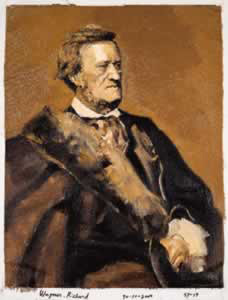
Born in Leipzig, Germany to a police official and baker’s daughter, Wagner was raised by his mother and a family friend. (His father died a few months after Wagner was born). Theater was a regular part of the young man's life; he was particularly taken with the incidental music that often accompanied the plays. Wagner began writing his own plays, and said that the only reason he began composing was to write his own incidental music. Even initially, he had an inclination for drama before music.
His career began slowly, but by 1843 he had his first two operatic successes with Rienzi and The Flying Dutchman, and therefore received an appointment as Director of the Dresden Opera. With each successive opera his reputation and confidence increased. Tannhäuser (1845) and Lohengrin (1850) firmly established Wagner as the heir apparent to the German Romantic opera throne vacated by Carl Maria von Weber.
In 1851, Wagner wrote Opera and Drama, one of a series of essays outlining his theories on opera. He felt that the traditional Italian form paid too much attention to the divisions of aria and recitative, and not enough to the dramatic flow of the opera. Wagner argued that the drama stopped with each break following an aria or chorus in Italian opera. He advocated a drama where music flowed continuously. Therefore, since the word opera was so inextricably linked to Italian music, Wagner created the term “music drama” for his works. These new ideas also made Wagner rethink his harmonic structures that required tension and resolution, since every resolution meant a potential stopping point.
By 1862, Wagner had completed four more music dramas: Tristan und Isolde, Die Meistersinger von Nürnberg (The Mastersinger of Nuremburg), and the first two dramas of Der Ring des Nibelungen: Das Rheingold, and Die Walküre. The Ring of Nibelungen, often known simply as The Ring, is a massive set of four dramas that includes the two listed above, as well as Siegfried and Götterdämmerung (The Twilight of the Gods). Together, they form a cycle that tells the story of the Gods of Norse mythology. In terms of scope, it is arguably the largest undertaking in the history of Western music, as each of the operas in the cycle often extends over four hours. Wagner had a theater built in Bayreuth specifically to stage The Ring. The theater included several innovations that influenced theatrical design for years to come. It is still the home to an annual revival of The Ring.
In order to establish thematic unity in the music drama, Wagner introduced the leitmotif, a musical theme or motive that represents a character, object, or idea. (This was a concept not too dissimilar from Berlioz’ idée fixe). Whenever a person or object appears onstage, a specific leitmotif appears in the music. Occasionally the leitmotif is used when that character or object is not present, in order to make the listener think of the subject. Thus, the leitmotif becomes a powerful psychological tool. An example of this technique is the appearance of the Siegfried motive at the end of Die Walküre. The motive does not represent a character in Die Walküre, but the main character in Siegfried, the next music drama in The Ring. This scene also includes at least three other leitmotifs. (The leitmotif concept is used today in motion picture music).
Another aspect of Wagner's music that places him at the forefront of his generation is his bold use of harmony. The Overture to Tristan und Isolde begins on a single note, A. (The opening two measures form the “Isolde” leitmotif). However, Wagner immediately moves away from A minor and returns to it only briefly about 30 measures later.
Especially in his late dramas, Wagner stretches the fabric of tonality almost to its breaking point. If the major/minor tonal system is built on the premise that chord progressions need to lead to a resolution on the tonic, then what happens if we never reach the tonic? The net result is a sense of restlessness or endlessness in the harmony. If we don’t use the tonic, then why bother with it?
Wagner's contributions to Romantic music may be summarized as follows:
- Completing the restructuring of the traditional opera that began in the 18th century, leading to a new conceptualization of the art as music drama.
- Creating the leitmotif.
- Stretching the harmonic advances of Beethoven, Schubert, Liszt and others to new limits.
Composer: Richard Wagner
-
"Tristan and Isolde: Overture"
The Post-Romantics and a New Age
One reason for studying music history is to understand why the composers of a given era write the music that they do. This understanding, however, can only be achieved in hindsight. While in 1890 neither Verdi, nor Brahms, nor Tchaikovsky could have anticipated the transformations that would reshape the Western musical world, these changes had already begun in France, Germany, Russia, and the United States. We call the final twenty years of the Romantic period Post-Romanticism, although, in reality, two completely different musical trends were unfolding simultaneously. One school of thought originated in France and Russia, while the other came from both the traditionalist and anti-traditionalist camps in Austria and Germany.
The two schools of thought did agree on the premise that the major/minor tonal system, which had guided composition since the Baroque era, was exhausted. Also, there was a general consensus that, for artistic as well as economic reasons, the Romantic trend of creating incrementally longer works with larger orchestras and choirs could not continue.
New Ideas in France and Russia
The French had long been working against the dominant movement of German Romanticism. While they admired the musical ideals of Mozart, Haydn, Beethoven, and Schubert, French composers were also trying to create new forms of music whenever possible, as seen in their development of popular ballet and of opera forms substantially different from Italian opera. As previously noted, there is a ‘distinctive French’ character to the music of Franck and Saint-Saëns.
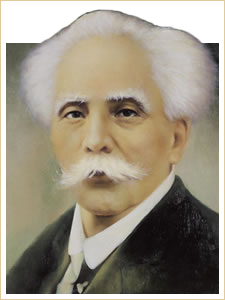
With the music of Gabriel Fauré (1845-1924), this characteristic of ‘French-ness’ is carried to a new level. The first movement from his masterful Requiem shows deeper attention to harmony as an element of color rather than as a unifying force that propels the music forward. Note how chords seem to float independently from one another. There is also a more delicate quality to his compositions that may be heard clearly in the beautiful song Apres un reve, here performed on the organ.
Composer: Gabriel Fauré
-
"Requiem, Op. 48: Introit et Kyrie"
Composer: Gabriel Fauré
-
"Three Songs, Op. 7: No. 1. Après un rêve"
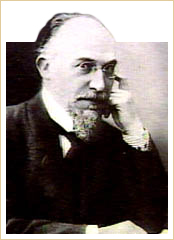
Another late-Romantic French composer whose music exhibits the same delicacy is the enigmatic Erik Satie (1866-1925). His works, like the popular set of Gymnopedies for piano, are fanciful, light, compact, and devoid of the Romantic self-importance found in the Romantic music of most of his German contemporaries.
The music of the Russian "Mighty Five," including Mussorgsky’s opera Boris Gudonov and Rimsky-Korsakov’s Scheherazade show the same non-linear approach to harmony, treating it primarily as color.
Composer: Erik Satie
-
"Gymnopédie No. 1 (arranged by Anders Miolin)"

Satie's works are fanciful, light, compact, and devoid of the Romantic self-importance found in the Romantic music of most of his German contemporaries...




Each of Elgar's fourteen 'Enigma' Variations has a cryptic subtitle that relates to a particular person (or animal) in his life
