
Objectives
- List the characteristics of the Baroque era (1600-1750) in context of social change including religious wars (Protestants vs. Catholics), the exploration and colonization of the New World, and the rise of middle-class culture.
- Identify a new style—monody—that featured solo song with instrumental accompaniment in the Baroque period through listening examples.
- Define figured bass, a shorthand that allowed the performer to supply chords through improvisation.
- Compare and contrast the major-minor tonality system and the equal temperament tuning system.
- Explain the significance of the union of text and music as expressed in the Baroque Doctrine of the Affections and reflected in genres such as opera, oratorio, and cantata.
- Define and compare the genres of opera, oratorio, and cantata.
- Compare and contrast the development of two types of concertos: the solo concerto and the concerto grosso.
- Correctly identify visually and aurally the main keyboard instruments of the Baroque era: organ, harpsichord, and clavichord.
- Describe the main characteristics of J. S. Bach's keyboard music, in particular his Well-Tempered Clavier.
Three Important Baroque Opera Composers
Jean Baptiste Lully (1632-1687)
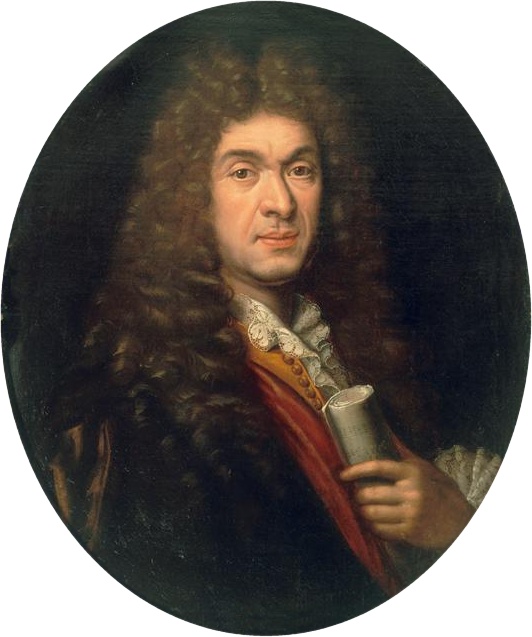
France was the last European country to embrace opera; it was not until the 1670s, under King Louis XIV, that the first French opera house opened. Jean Baptiste Lully (1632-1687), an Italian by birth, became the most powerful musical figure in late 17th century France under the patronage of King Louis XIV; he succeeded in transforming the Italian opera into a distinctly French form called tragédie lyrique. His addition to the opera of the ballet, such as this dance from Xerxes, was a nod to French audiences, who loved ballet. (Although dance remained a feature of French opera for many years, it was totally resisted by Italian, German, and English composers.) Lully was also the first composer to successfully adapt the recitative to the intricacies of the French language.
Another key feature of Lully’s opera was his addition of the French overture. This independent instrumental composition opened the opera, but was also used later as the first movement of an instrumental composition such as a sonata or concerto. Other European composers later adopted the French overture.
Henry Purcell (1659-1695)
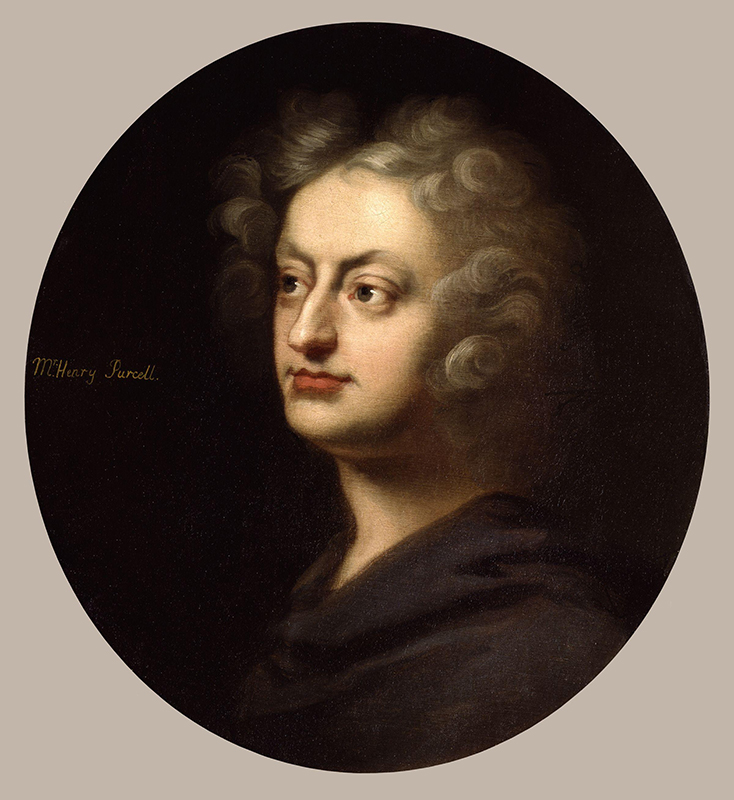
Purcell was the last great English-born composer until Sir Edward Elgar in the late 19th century. English composers of the time ignored the styles of continental Europe in favor of an English 'national' style; however, Purcell strongly resisted this trend, and, instead, he adopted Italian forms. In doing so, he established a foothold for opera in England, while simultaneously composing for all of the major genres. His operatic works include Dioclesian (1690), King Arthur (1691), The Fairy Queen (1692), and The Tempest (1695). His masterpiece (the first in English opera) was Dido and Aeneas (1689), the story of a doomed love affair between Aeneas, the hero of Virgil's Aeneid, and Dido, the Queen of Carthage.
Dido and Aeneas is one of the finest examples of a Baroque composer's ability to project pathos. Dido's aria When I am laid in Earth, and the recitative that introduces it, Thy hand, Belinda, are two of the most memorable moments in all of opera. When I am laid in Earth opens with a descending chromatic line—the ground bass—which is repeated eleven times throughout the aria. Purcell uses word painting on the words "laid"—where he uses a descending chromatic line to portray death and agony—and "remember me." The sudden register leap and crescendo in the last appearance of "remember me" underscore Dido's desperate cry as she prepares for her death.
Composer: Henry Purcell
-
"Dido and Aeneas: Thy Hand Belinda"
Composer: Henry Purcell
-
"Dido and Aeneas: When I am laid in Earth"
Composer: Henry Purcell
-
"Dido and Aeneas: When I am laid in Earth" [ 00:00-00:16 ]00:15
Composer: Henry Purcell
-
"Dido and Aeneas: When I am laid in Earth" [ 01:59-02:03 ]00:03
When I am laid, am laid in earth, may my wrongs create
No trouble, no trouble in, in thy breast
When I am laid, am laid in earth, may my wrongs create
No trouble, no trouble in, in thy breast
Remember me, remember me, but ah
Forget my fate
Remember me, but ah
Forget my fate
Remember me, remember me, but ah
Forget my fate
Remember me, but ah
Forget my fate
George Frideric Handel (1685-1759)
Unlike Bach, who wrote primarily church and instrumental music, or Lully, who focused largely on opera, Handel was fluent in all of the genres of the Baroque period. His more than 40 operas include Almira (1705), Rinaldo (1711), Giulio Cesare (1724), and Serse (1738). These works neither represent substantial advances in operatic composition, nor include any remarkable new inventions. Instead, they symbolize the ultimate flowering of Baroque operatic style.
The aria Lascia ch'io pianga, from Rinaldo, is a good example of one the most common types of aria found in Baroque vocal music: the da capo aria. In this form, the composer follows the opening section of the aria with a B section that is different in character from the opening A section. After the B section, the A section returns, either with a new ending, or with a repeat sign at the end of the B section instructing the singer to return to the first page of the aria.
Composer: George Frideric Handel
-
"Rinaldo, HWV 7: Lascia ch'io pianga" [ 00:46-04:36 ]03:50



