Generating page narration, please wait...

Learning Objectives
Be ready to...
- Recognize the differences between the Medieval and Renaissance periods in terms of society, religion, art, science, and freedom.
- Explain how Renaissance musicians made their living.
- Use relevant musical vocabulary to analyze Renaissance a cappella singing.
- Distinguish the characteristics of Renaissance music, and differentiate between Renaissance music and Medieval music.
- Illustrate how composers used the motet, a sacred genre with a Latin devotional text, to experiment in musical style and texture.
- Describe how Renaissance composers set texts from the Ordinary of the Mass for their polyphonic Masses.
- Describe how instrumental dance music was performed by professional and amateur musicians.
Renaissance Period (1450–1600)
Listening Bridge
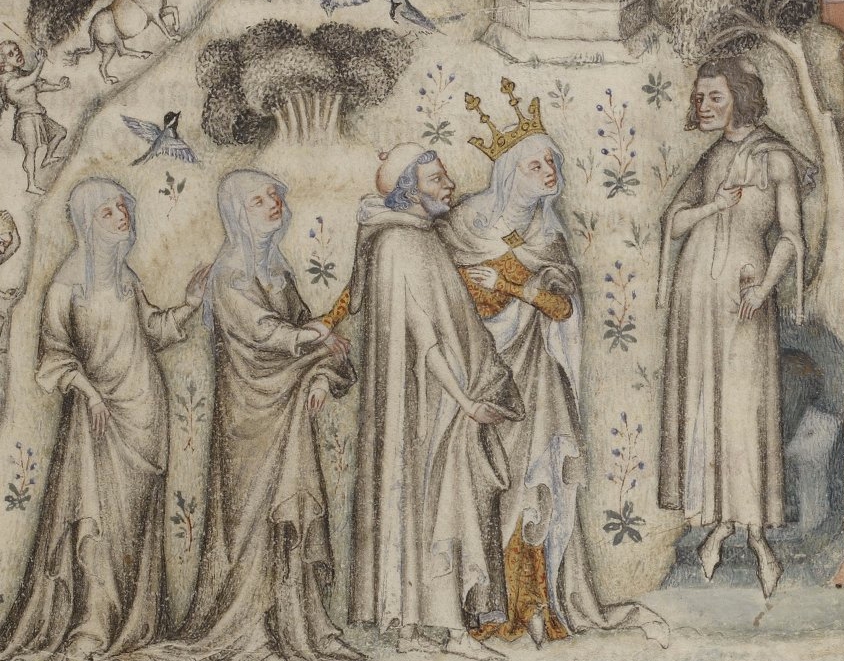
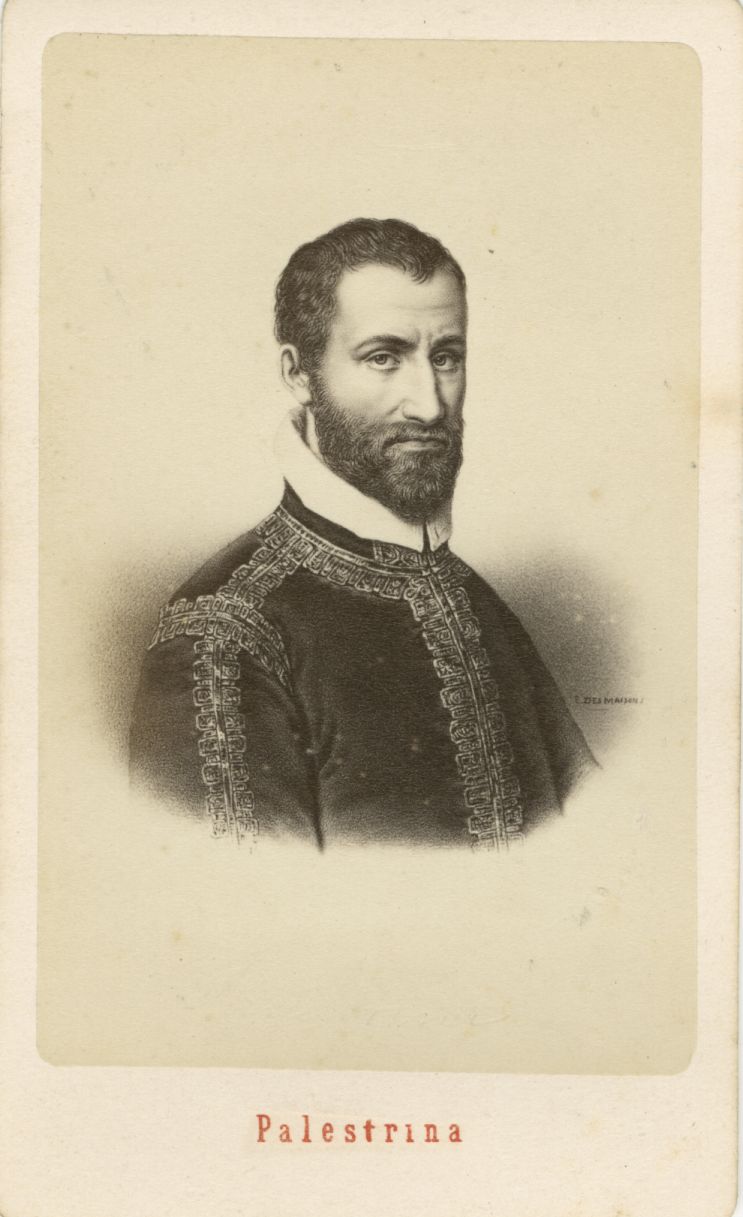
Listen to these two Kyries from the Mass and compare them, using the following questions as a guide:
- Are the melodies mostly stepwise, or do they contain many skips and leaps?
- Which has a more recognizable pulse?
- In which piece do the voices more frequently come together to form chords?
- In which piece do the voices sound more independent of one another, rhythmically and melodically?
- What factors do you think make Palestrina's Kyrie sound more modern to our ears and Machaut's sound older?
Listening Prelude
The following Renaissance piece is still popular with choral groups today. Listen to it, considering the following questions:
- Is the meter regular and consistent, or does it change?
- Are there clear musical phrases? (Can you tell where one idea ends and another begins?)
- Are certain sections repeated?
- What do you hear at the words "Up and down"?
- How does the music change at the words "When he found her"?
Guide
0:00—0:17
Fair Phyllis I saw sitting all alone,
Feeding her flock near to the mountainside
Feeding her flock near to the mountainside
0:17—0:29
The shepherds knew not whither she was gone,
But after her lover Amyntas hied
But after her lover Amyntas hied
0:29—1:49
Up and down he wandered whilst she was missing;
When he found her, Oh then they fell a-kissing
When he found her, Oh then they fell a-kissing