
Objectives
- Relate how Romantic poets and artists abandoned traditional subjects, turning instead to the passionate and the fanciful.
- Relate how the Industrial Revolution impacted the technological development and affordability of musical instruments.
- Analyze how the orchestra grew in size and sound as new instruments were introduced and composers demanded greater levels of expression.
- Illustrate how Romantic composers explored nationalistic folklore and exotic subjects.
- Identify the form of romantic period songs, including strophic, through-composed, and the modified strophic forms.
- Examine the German art song (or Lied) as a favored romantic period genre.
- Discuss how the music of Franz Schubert impacted romantic period music.
- Discuss how the music of Frédéric Chopin impacted romantic period music.
- Trace the ascendance of program music in relation to absolute music.
- Summarize how political unrest throughout Europe stimulated the formation of schools of musical nationalism in Russia, Scandinavia, Spain, England, and Bohemia among other countries.
- Differentiate between the distinct national styles of romantic opera in France, Germany, and Italy.
- Discuss how the Italian nationalist composer Giuseppe Verdi impacted romantic period music.
- Trace how choral music became a popular artistic outlet for the middle classes.
- Discuss how the Russian composer Pyotr Ilyich Tchaikovsky impacted romantic period musi
Romantic Period: Rossini, Bellini, and Donizetti
Rossini and Italian Opera
Due in part to the spectacular popularity of opera, Italy became the center of European music during the Baroque and Romantic eras. Italy was the place where a young composer could truly make his mark in the world. At the same time, Italian musicians, composers, and poets were in high demand throughout the principal cities of Europe: Paris, Vienna, Bonn, and Salzburg. Ironically, Italian opera had changed very little since its inception in the early 17th century. During the 18th century its refinements were primarily melodic and formal. Hence, the dramatic elements of opera leading into the 19th century were relatively consistent.
In the early years of the 19th century, several composers made substantial changes to the operatic landscape thereby clearing the way for later musical giants. These early Romantic composers inherited Mozart’s operatic style that adhered fairly strictly to Italian traditions and romantic form. Gioachino Rossini (1792-1868), Vincenzo Bellini (1801-1835), and Gaetano Donizetti (1797-1848), however, changed Italian opera in a relatively brief period of time, and paved the way for Italy’s two great late-Romantic opera composers: Verdi and Puccini.
Gioachino Rossini (1792-1868)
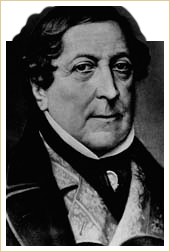
Rossini was a composer whose melodic gifts and comic flair were perfectly suited for opera buffa. His abilities for both are aptly demonstrated in the aria Una voce poco fa from his masterpiece, The Barber of Seville.
Composer: Gioachino Rossini
-
"Il barbiere di Siviglia (The Barber of Seville): Overture (arr. W. Sedlak): Act I: Cavatina: Una voce poco fa (Moderato)"

Rossini was a composer whose melodic gifts and comic flair were perfectly suited for opera buffa...

During this transition into the Romantic era, Italian opera composers slowly began to incorporate some changes that had already occurred in French opera, as well as others inspired by Beethoven’s symphonic music. As the staging became more elaborate, opera orchestras became larger. The inclusion of more brass and woodwinds in the orchestra increased the colors in the composer’s palette. The line between opera buffa and opera seria blurred, as did the line between recitative, aria, ensemble, and chorus. To see how one part of the operatic structure changed, compare Rossini’s overture to The Barber of Seville (1816) to his overture to William Tell (1829). The earlier work has a simplified sonata-allegro form with a medium-sized orchestra. The later work is considerably longer, has more passages for winds and brass, and exhibits a more complex form.
Composer: Gioachino Rossini
-
"William Tell: Overture"
Composer: Gioachino Rossini
-
"Il barbiere di Siviglia (The Barber Of Seville): Overture"
Rossini was born in Pesaro in 1792, five months after his parents' were married. His father, a brass player, and, later, a horn teacher at the Academy in Bologne, had a modestly successful career that was frequently disturbed by the political changes of the period, as the French replaced the Austrians in Northern Italy. Rossini's mother was a singer. As a boy, Gioachino played with his father in the orchestra pit, and, from time to time, appeared as a singer with his mother. Later, he worked as keyboard player in the opera orchestra. Rossini's early music studies were primarily with his parents, and, through the generosity of rich patrons, with a few, select other teachers.
From his first opera, La cambiale di matrimonio, in 1810, to William Tell, his final work for the stage, which was written for Paris in 1829, Rossini enjoyed a short and extremely successful career as a composer. Other operas had been commissioned in Paris, but the fall of the Bourbon King Charles X in 1830 concluded these plans. In 1836, he returned to Italy and, in spite of ill health, was very much involved in the affairs of the Liceo Musicale in Bologne. In 1853, having already retired from operatic composition after William Tell, he returned to Paris, where he enjoyed a reputation as an arbiter of musical taste, a wit, and a gourmet. Rossini devoted the last forty years of his life to piano music and sacred choral works, and to the enjoyment of the continued popularity of his works. By the 1850s, he had already taken his place atop the pantheon of Italian opera composers.
Of Rossini's three dozen plus operas, Il Barbiere di Siviglia (The Barber of Seville) is probably the best known. The work is a treatment of the first play of the Figaro trilogy by Beaumarchais from which Mozart had drawn thirty years earlier. Other well known comic operas by Rossini include La Scala di Seta (The Silken Ladder), Il Signor Bruschino, L'Italiana in Algeri (The Italian Girl in Algiers), Il Turco in Italia (The Turk in Italy), La Cenerentola (Cinderella), and La Gazza ladra (The Thieving Magpie). More serious subjects were tackled in Otello, Semiramide, Mose in Egitto (Moses in Egypt), and the Guillaume Tell (William Tell), based on the play by Schiller. The Overtures to many of these operas are a recurrent element in the concert halls all over the world.
Vincenzo Bellini (1801-1835)
Bellini's melodies are among the most beautiful to be found in Italian opera...
Although he only wrote ten operas, all of them opera seria, Bellini exercised considerable influence over contemporaries and successors alike. His melodies are among the most beautiful to be found in Italian opera. His work incorporates Romantic themes and ideas; Norma and La Sonnambula (The Sleep-Walker) produced in Milan in 1831, for example, are based on Romantic or historical themes, instead of the romantic literary stories found in 18th century opera seria. Yet Bellini’s music is still conservative, as evidenced in the soprano aria Come per me sereno (See how the day serenely) from La Sonnambula, and opera which was first performed at the Teatro Carcano, Milan, in 1831. In the piece, Amina, foster-daughter of Teresa, owner of the village mill, is set to marry Elvino. However, she walks in her sleep, and is discovered in the bedroom of Count Rodolfo. Rodolfo eventually puts matters right by convincing the villagers and Elvino that Amina is a sleepwalker. In Come per me sereno, Act I, Amina sings of her happiness at her betrothal to Elvino.
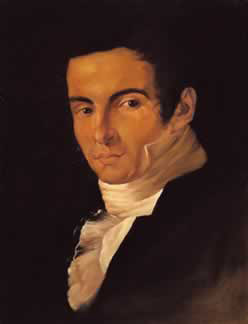
Composer: Vincenzo Bellini
-
"La Sonnambula: Come per me sereno"
Other Bellini operas include a version of Shakespeare's Romeo and Juliet, I Capuletti i Montecchi (The Capulets and The Montagues) and I Puritani, mounted in Paris in 1835.
Gaetano Donizetti (1797-1848)
Donizetti was a commercially successful composer who often wrote quickly and according to what he felt the public would want to hear...
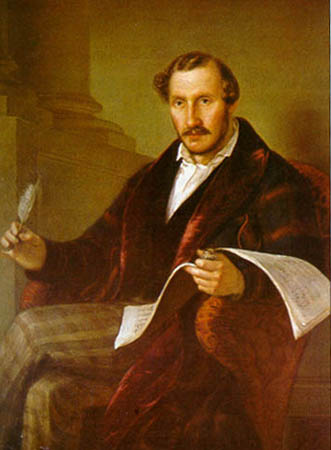
Together with Bellini, Donizetti is of the generation of Italian opera composers who fit between Rossini and Verdi. Along with other composers of the period, he found inspiration in the novels of Sir Walter Scott. His opera Lucia di Lammermoor (1835) is based on The Bride of Lammermuir, a story that contains the necessary dramatic elements of love, revenge, and madness. The plot concerns the dispossessed landowner, Edgardo, who has lost both his ancestral Ravenswood Castle and his beloved Lucia, sister of his enemy Enrico. Act III of the opera opens at Wolfscrag Castle, where Edgardo now resides. It is a stormy night, Orrida é questa notte, and Edgardo is deep in thought. Horses approach, and Enrico bursts in, resolved to avenge his honor. Enrico tells Edgardo that Lucia is now married, and challenges him to a duel to be fought at dawn. Orrida é questa notte for baritone and tenor is a splendid example of Donizetti's compositional style, particularly his approach to writing operatic duets.
Composer: Gaetano Donizetti
-
"Lucia di Lammermoor: Orrida é questa notte"
Having written close to 70 comic and serious operas in his lifetime, Donizetti was one of Italy’s most prolific composers. He was a commercially successful composer who often wrote quickly and according to what he felt the public would want to hear. Perhaps his most lasting legacy comes from Lucia di Lammermoor, La Fille du Régiment (Daughter of the Regiment), L’elisir d’amore (Elixir of Love) and Don Pasquale.
Further Listening: Romantic Period
- Schubert - Gretchen am Spinrade (Gretchen at the Spinning Wheel)
- Schubert - Erlkönig (Erlking)
- Schubert - Trout quintet, first movement
- Schubert - C-major symphony, The Great, fourth movement
- Schubert - B-minor symphony, Unfinished, first movement
- Mendelssohn - Symphony No. 3, Scottish, 2nd movement
- Mendelssohn - Scherzo from incidental Music for Midsummer Night’s Dream
- Mendelssohn - Hear My Prayer for chorus, soloist and organ
- Rossini - Overture to The Barber of Seville
- Bellini - Come per me sereno from La Sonnambula
- Donizetti - Orridaé questa notte from Lucia di Lammermoor
Composer: Franz Schubert
-
"Erlkönig, D. 328"
Composer: Franz Schubert
-
"Piano Quintet in A major, D. 667, The Trout: I. Allegro Vivace"
Composer: Franz Schubert
-
"Symphony No. 9 in C major: IV. Finale: Allegro Vivace"
Composer: Franz Schubert
-
"Symphony No. 8 in B Minor, D. 759 "Unfinished": I. Allegro moderato"
Composer: Felix Mendelssohn
-
"Symphony No. 3 in A minor, Scottish: II. Vivace ma non troppo"
Composer: Felix Mendelssohn
-
"A Midsummer Night's Dream: Scherzo, Op. 61, No. 1"
Composer: Felix Mendelssohn
-
"Hear My Prayer"
Composer: Vincenzo Bellini
-
"La Sonnambula: Come per me sereno"
Composer: Gaetano Donizetti
-
"Lucia di Lammermoor: Orrida é questa notte"



