
Overview
As bop continued to evolve, so, too, did the styles and tastes of musicians. While some musicians looked back to more traditional styles of jazz, others continued to explore the new possibilities of modern jazz. This section covers the birth of a new style labeled cool jazz, whose practitioners cultivated a variety of approaches and sounds, even though they all leaned toward an aesthetic of emotional restraint and understatement. We will learn how Miles Davis, Chet Baker, Bob Brookmeyer, Stan Kenton, Lennie Tristano, Stan Getz, and Gerry Mulligan contributed to the beginnings of Cool Jazz.
Objectives
Upon completion of this lesson, you will be able to do the following:
- Identify notable musicians who contributed to cool jazz
- Understand how cool jazz evolved
- Recognize the related style of West Coast jazz
- Appreciate the Modern Jazz Quartet’s role in pioneering third-stream jazz
1950 Metronome All-Stars
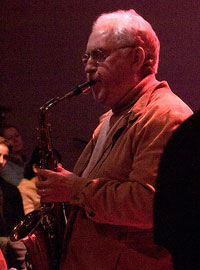
The two leading jazz magazines through the swing and post-bop eras were Downbeat and Metronome. Through much of the 1940s and 1950s, Metronome not only conducted popularity polls among its readers, it also assembled "All-Star" bands to record one or two pieces, allowing each member a featured solo.
In 1950, the winners from Metronome's previous year's poll included Dizzy Gillespie on trumpet, Lee Konitz on alto sax, Stan Getz on tenor sax, Serge Chaloff on baritone sax, Lennie Tristano on piano, Billy Bauer on guitar, and Max Roach on drums. One of the pieces recorded by the group, "No Figs", was composed and arranged by Lennie Tristano. In his arrangement, Tristano omits trumpet, which imbues the group with a softer tonal quality.
The headA synonym for melody. includes intricate fluttering sounds that are the result of the instruments weaving a delicate tapestry. The solos are, as one might expect, first-rate. The overall effect is a relaxed, "cool" sound that owes much to the three members of Tristano's quintet.
"No Figs", which uses the chord progression from the old jazz standard (Back Home Again In) Indiana ♫, is a 32-bar binary form (ABAB'). Three-quarters of the way through the first chorus (0:33), Lee Konitz steps up to take the first solo on alto sax. Konitz's sound is light and smooth, carrying forward the feel that's already been established. When Stan Getz takes over on tenor sax at the beginning of the second chorus (0:44), so consistent is the sound that we have to listen carefully to hear the transition. Getz solos for 16 bars, followed by trombonist Kai Winding, who takes the latter half of the second chorus (1:06-1:27). Clarinetist Buddy DeFranco and baritone saxophonist Serge Chaloff similarly divide the third chorus (1:28-2:09). Then it's Tristano's turn. He solos over the first half of the fourth chorus (2:10-2:30), offering up as many quadruple-time flurries of notes as any of his band mates before the return of the headA synonym for melody. brings the piece to a close.



Miles Davis made his television acting debut when he appeared in an episode of Miami Vice where he played a pimp named Ivory Jones.
