Learning Objectives
- Outline the social, cultural, and political impact of WWI and WWII.
- Discuss the growth of the United States as a world power.
- Describe the impact of technological advancements on the development of music in the twentieth century.
- Describe, compare and contrast the main stylistic differences of Contemporary music styles including impressionism, post-Romanticism, serialism, and expressionism.
- Summarize the changing nature and application of the concept of tonality throughout the century.
- Discuss the impact of Claude Debussy's "Prelude to the Afternoon of a Faun" in light of the Symbolist movement in literature.
- Illustrate how the Russian composer Igor Stravinsky experimented with rhythm, new instrumental combinations, and the percussive use of dissonance, and discuss the impactof these techniques on contemporary music.
- Describe the impact of Arnold Schoenberg and the Second Viennese School on 20th-century music.
- Distinguish the main stylistic differences of nineteenth- and twentieth-century composers and styles.
- Describe the musical and political impact of “national schools” of composition that developed across Europe during the 20th century.
- Explain the impact of composer Aaron Copland on American contemporary music.
- Describe the impact of Latin American composers on the larger "art music" scene and repertoire.
- Define and analyze the main differences between jazz, ragtime, and blues.
Music of the 20th and 21st Centuries (1900-Present)
Social, Cultural, and Political Background
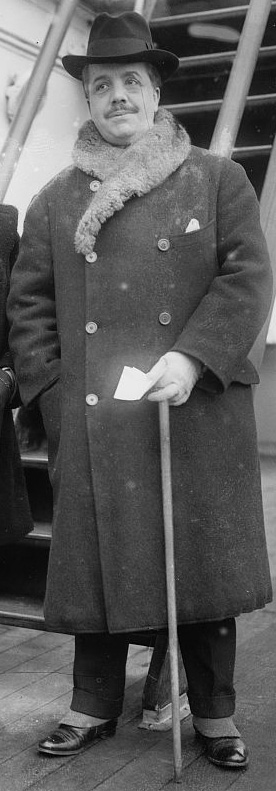
In Paris, the brilliant Ballets Russes was a focal point in the avant-garde scene. From 1909 until 1929, the year its impresario Sergei Diaghilev died, the Russian Ballet produced ballets using the most cutting-edge music, librettos and scenarios (a scenario is the storyline of a ballet), and artwork. Among the great choreographers and dancers involved were Vaslav Nijinsky, Anna Pavlova, and George Balanchine. Undoubtedly the most famous composer associated with the Ballets Russes was Igor Stravinsky, whose Rite of Spring ballet caused a riot at its 1913 premiere. Other composers included fellow Russian ex-pat Sergei Prokofiev, Claude Debussy, Maurice Ravel, Francis Poulenc, and Erik Satie. The trend-setting writer, designer, and filmmaker Jean Cocteau (1889–1963) also contributed to a number of productions.
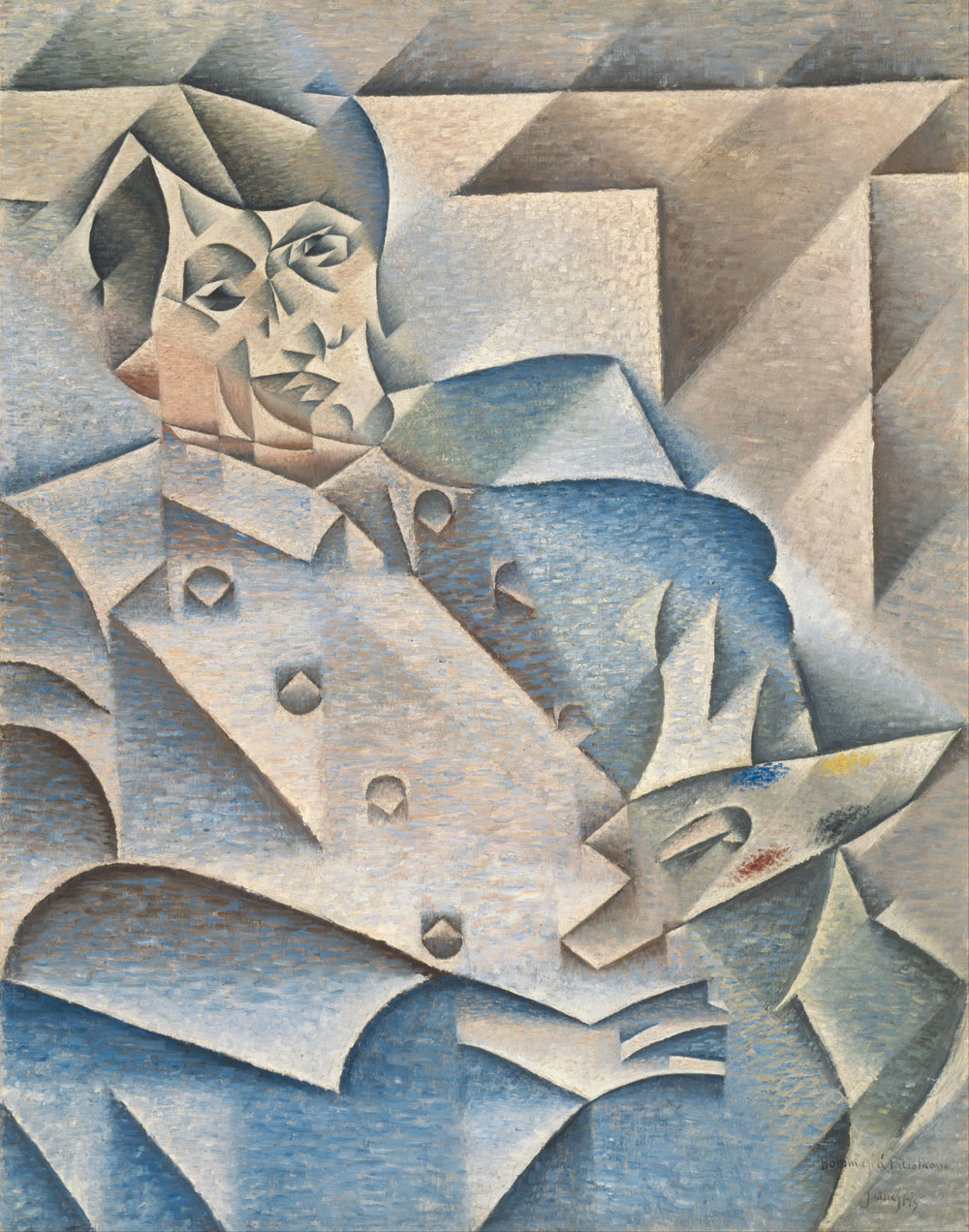
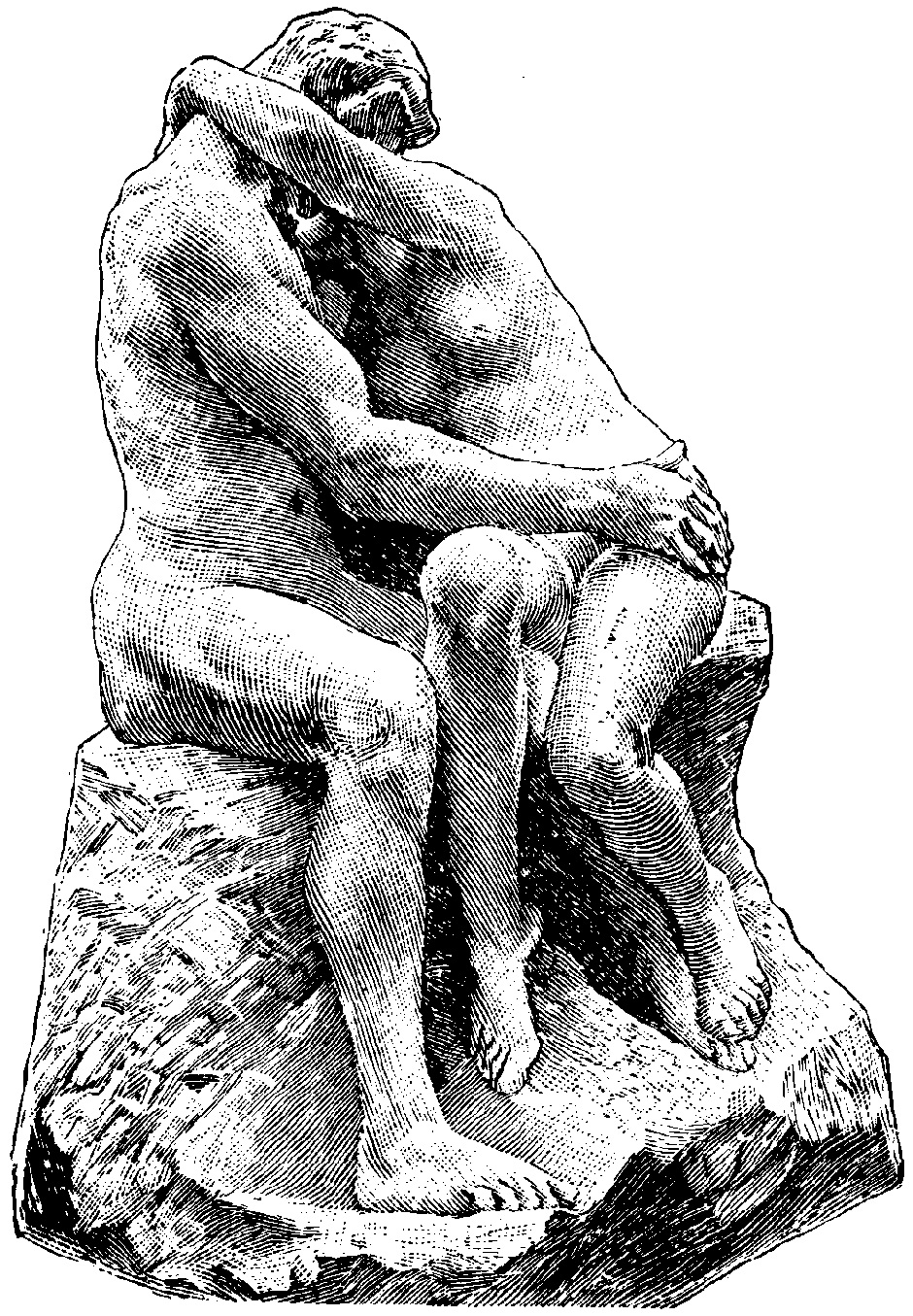
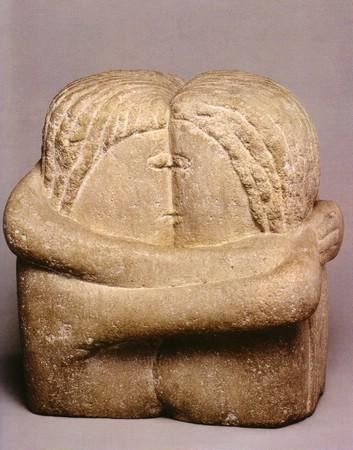
Three artists stand out among the many who collaborated on sets and design for the Ballets Russes: Pablo Picasso (1881–1973), Georges Braque (1882–1963), and Juan Gris (1887–1927). At that time, all three of them were developing “cubism,” a technique that breaks up objects into multiple surfaces and then displays them together on the same picture plane. Cubist modernist painters used colors, canvas, perspective, and geometry to shift focus away from the literal portrayal of an object—see the short, interesting analysis of Gris's Portrait of Pablo Picasso. The two sculptures below, both called The Kiss, illustrate the contrast between Romanticism and modernism: Auguste Rodin's (left), created in 1886, depicts two realistic nude figures locked in a passionate embrace, while Constantin Brâncusi's (right), created in 1908, focuses on abstract form.
Modernist artists challenged traditional assumptions and expectations of art. Composers used standard scales, chords, and rhythms in novel ways, employed non-traditional instrumental techniques to produce new sounds, and even incorporated everyday sounds—and eventually electronic sounds—into their compositions. John Cage's 4’33” famously integrates the random sounds that happen in the concert hall into the composition as the performer sits silently in front of a closed piano (see Discover Video).
Some governments responded adversely to modernism. Those in power found it incomprehensible and therefore threatening, and frequently held that it was politically and culturally subversive, or that it did not fit specific national-pride agendas. Totalitarian governments, in particular, placed great importance on simple, optimistic, stirring music that promoted faith in the current regime, educate people in a manner the regime deemed appropriate, and discourage dissent. Early in the century, the Russian government simply outlawed abstract art. After the Communist revolution in 1917, there was hope for a vibrant and unrestricted artistic climate, but the new Soviet government soon proved to be even stricter than the one it had replaced. Once Joseph Stalin came to power in 1929, composers and artists feared for their lives. Stalin, who is estimated to have had more people murdered than even Hitler, saw to it that numerous "non-compliant" Soviet artists, intellectuals, and musicians were killed or imprisoned. An official style of Socialist Realism was established for painting, sculpture, music, drama, and literature. Composers adapted or fled. Sergei Prokofiev and Igor Stravinsky went to Paris; Stravinsky remained in Paris, but eventually emigrated to the United States, while Prokofiev returned to Russia. Those who stayed in Russia, including the composer Dmitri Shostakovich, at times slept with packed suitcases under their beds, in case police should come for them in the night.
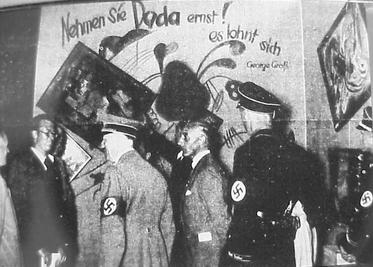
When Hitler came to power in Germany in 1933, he began a campaign against modernist art that culminated in the 1937 Degenerate Art Exhibition. Out-of-favor artworks were displayed awkwardly and accompanied by ridiculing signs. The purpose was to “teach” viewers what was wrong with modernist art and to attribute the modernist impulse to Jewish and nonwhite influences. The following year, an exhibit appeared mocking “Degenerate Music” and featuring the work of composers such as Arnold Schoenberg, Alban Berg, Paul Hindemith, and Igor Stravinsky, as well as music influenced by jazz. Together, these exhibitions toured the country for several years. Some of the artists and composers labeled degenerate went underground, some tried to create art that would no longer offend, and others emigrated—many to the United States.
Eminent scientists also left Germany in order to escape Hitler. Among them was Albert Einstein (1879–1955) who, perhaps more than any of his contemporaries, profoundly shook up traditional ways of thinking. In 1905, he turned Isaac Newton's concept of the universe on its head and demonstrated that space and time were not absolute but instead relative. After working out his special theory of relativity, Einstein went on to prove that energy and matter were linked, using his famous equation e=mc2. Then, in 1915, his general theory of relativity showed that space, time, matter, and energy were intimately related, each influencing the others. Nothing was as it seemed.