
Overview:
Math and music have many connections: counting, rhythm, scales, intervals, patterns, time signatures, and more. Music composition is simply a mathematical exercise combined with the inspiration of sounds, tempo, and pitch. Additionally, music is both an art and science, since both use mathematical principles and logic, blending creative thinking and inspiration, and use formulas and theories to solve problems. Sound vibrations are a type of mechanical action with a series of high and low points (remember, melodies have high and low pitches) with waves that move to specific frequencies consisting of ratios. In many ways, mathematics is used to create enjoyable music.
Objectives:
Students will be able to:
- Identify the commonalities between music and math as well as music and science.
- Design and develop age-appropriate lesson plans for integrating music and math as well as music and science.
- Model lessons that integrate music with math and science.
Music and Math
The mathematical basis of musical rhythm and rhythmic notation is the natural connection between music and math. Some sample activities that integrate mathematics into the music classroom are listed below.
As the teacher introduces concepts in music about longer, greater than, less than, even, and odd, he can coordinate those concepts with examples from elementary mathematics. For example,
- The teacher can use musical facts to construct math problems:
- Solo + quarter-note + quarter-rest = ?
- Trio + dotted half-note + number of valves on a trumpet + legs on a grand piano = ?
- Quarter + number of strings on a violin – half note = ?
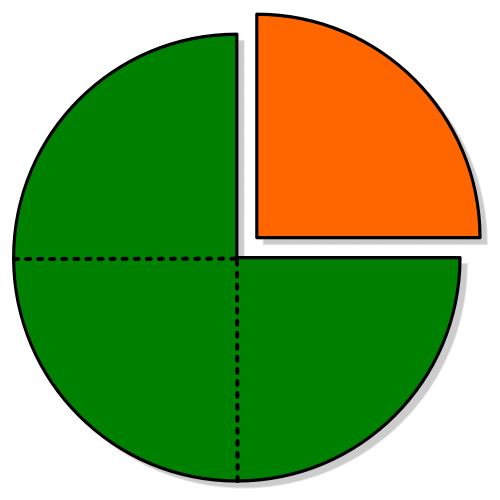
- Students can cut pies or paper circles into fractions using musical notation. For example, divide pies into quarters with a picture of a quarter note in each slice.
- Students can create musical instruments out of 10 clear glasses. Students measure the side of each glass and subtract one inch from the top. Divide this measurement by 10, using a crayon to mark 10 sections on each glass. Fill glasses with water to the lines. Label the first glass 1, the second glass 2, and so on, until the tenth glass is labeled 10. With a teaspoon, gently tap the first glass near the rim. Listen for the sound. As the numbers get higher and water increases, the tones get lower. Have students tap out phone numbers to listen for pitches and create other addition and subtraction problems to play.
- Students need 15 to 20 geometric pieces of paper (multiple numbers of three to five different shapes cut ahead, or they can cut triangles, squares, circles, and diamonds). The teacher can review shape names. In groups, students lay out a pattern they like and then decide on a sound for each shape. They may use rhythm instruments. Groups rehearse and then perform their composition (e.g., square = drum, circle = shaker).
- Music is made up of scales that are tuned according to frequencies, which are expressed in cents and measurable by electronic tuners. Students can experiment with using a synthesizer to tune intervals to scales found in different cultures.
- Equations in math represent symmetrical balance, a principle found in the musical notation.
- Students can number each tone of the scale (twelve-tone or diatonic) and then play with random orders of those numbers in lines, playing them forward, backward (retrograde), upside down (inversion), and any combination thereof. They can also stretch the length of the sounds by doubling them (augmentation) or cut them in half (diminution).